

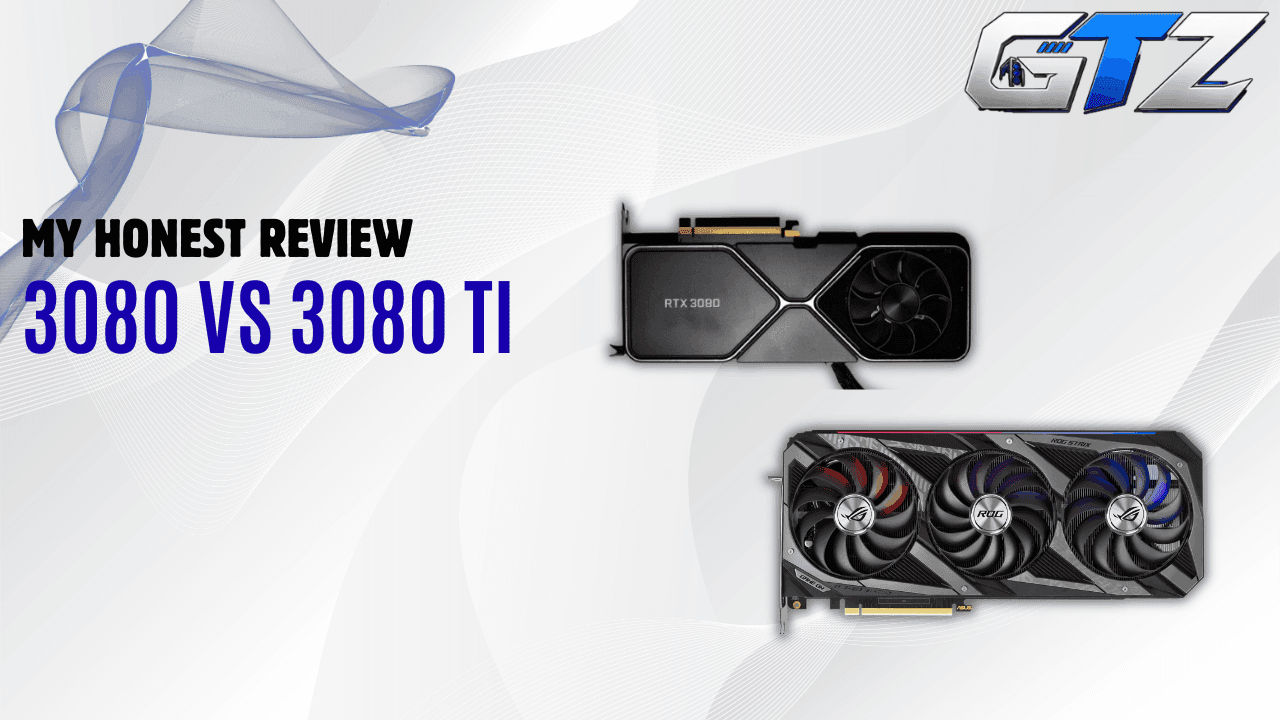
If you’re staring at listings for an RTX 3080 vs 3080Ti and wondering whether the “Ti” actually means anything, you’re not alone. Both cards are now used-market mainstays following the RTX 40 and 50 series launches, and sellers are pricing them all over the place. The problem is that most comparisons just drop a spec sheet and leave you more confused than before.
So here’s the direct answer: the 3080 Ti is faster—but not by enough to matter for most people. And at today’s used prices, the regular 3080 is genuinely the smarter buy in the vast majority of scenarios. Here’s exactly why.
⚡ Quick Verdict
Best for value at 1440p or 4K: RTX 3080 — delivers 90–95% of the Ti’s performance at a noticeably lower price.
Best if you need max VRAM and every last frame at 4K: RTX 3080 Ti — 12GB GDDR6X, more CUDA cores, and smoother minimums in the heaviest titles.
Bottom line: Unless the price gap between these two is under $50, get the 3080.
Specs at a Glance
| Spec | RTX 3080 (10GB) | RTX 3080 Ti |
|---|---|---|
| Architecture | Ampere (GA102) | Ampere (GA102) |
| CUDA Cores | 8,704 | 10,240 ✓ |
| VRAM | 10GB GDDR6X | 12GB GDDR6X ✓ |
| Memory Bus | 320-bit | 384-bit ✓ |
| Memory Bandwidth | 760 GB/s | 912 GB/s ✓ |
| Boost Clock | ~1,710 MHz | 1,665 MHz |
| TDP | 320W ✓ | 350W |
| PSU Recommended | 750W+ | 850W+ |
| Used Price (mid-2026) | ~$250–$350 ✓ | ~$400–$500 |
| DLSS Frame Generation | ✗ (DLSS 2 only) | ✗ (DLSS 2 only) |
My Experience with The RTX 3080
I’ve been using the EVGA GeForce RTX 3080, and it has consistently exceeded my expectations. Even in 2026, it delivers excellent performance in modern AAA games, handling 1440p ultra settings with ease while also providing a great 4K gaming experience when paired with DLSS.
The EVGA cooler keeps temperatures under control, and the card remains quiet during long gaming sessions, making it enjoyable for everyday use. Its build quality has also proven reliable over time, with no issues affecting performance.
While the RTX 3080 Ti offers a modest performance advantage, my experience shows that the standard RTX 3080 already provides everything most gamers need. It continues to strike an outstanding balance between performance, efficiency, and value, making it a GPU I can confidently recommend.
1080p Gaming Benchmarks
| Game | RTX 3080 FPS | RTX 3080 Temp | RTX 3080 Ti FPS | RTX 3080 Ti Temp |
| God of War Ragnarök | ~125 | ~68°C | ~125 | ~65°C |
| Cyberpunk 2077 | ~83 | ~67°C | ~90 | ~64°C |
| Dying Light 2 | ~125 | ~64°C | ~130 | ~62°C |
| Marvel’s Spider-Man Remastered | ~85 | ~56°C | ~80 | ~55°C |
| Forza Horizon 5 | ~133 | ~53°C | ~140 | ~47°C |
1440p Gaming Benchmarks
| Game | RTX 3080 FPS | RTX 3080 Temp | RTX 3080 Ti FPS | RTX 3080 Ti Temp |
| God of War Ragnarök | ~100 | ~63°C | ~110 | ~73°C |
| Black Myth: Wukong | ~90 | ~65°C | ~60 | ~75°C |
| The Last of Us Part I | ~60 | ~76°C | ~70 | ~80°C |
| Forza Horizon 5 | ~150 | ~73°C | ~170 | ~68°C |
| Call of Duty: MWII | ~100 | ~74°C | ~110 | ~67°C |
| Cyberpunk 2077 | ~90 | ~78°C | ~100 | ~74°C |
| Red Dead Redemption 2 | ~90 | ~80°C | ~100 | ~72°C |
4K Gaming Benchmarks
| Game | RTX 3080 FPS | RTX 3080 Temp | RTX 3080 Ti FPS | RTX 3080 Ti Temp |
| 007 First Light | ~50 | ~65°C | ~60 | ~74°C |
| Forza Horizon 6 | ~80 | ~76°C | ~80 | ~70°C |
| Resident Evil Requiem | ~50 | ~80°C | ~55 | ~80°C |
| Cyberpunk 2077 | ~50 | ~77°C | ~55 | ~75°C |
What is the Performace Difference Between RTX 3080 and RTX 3080Ti?
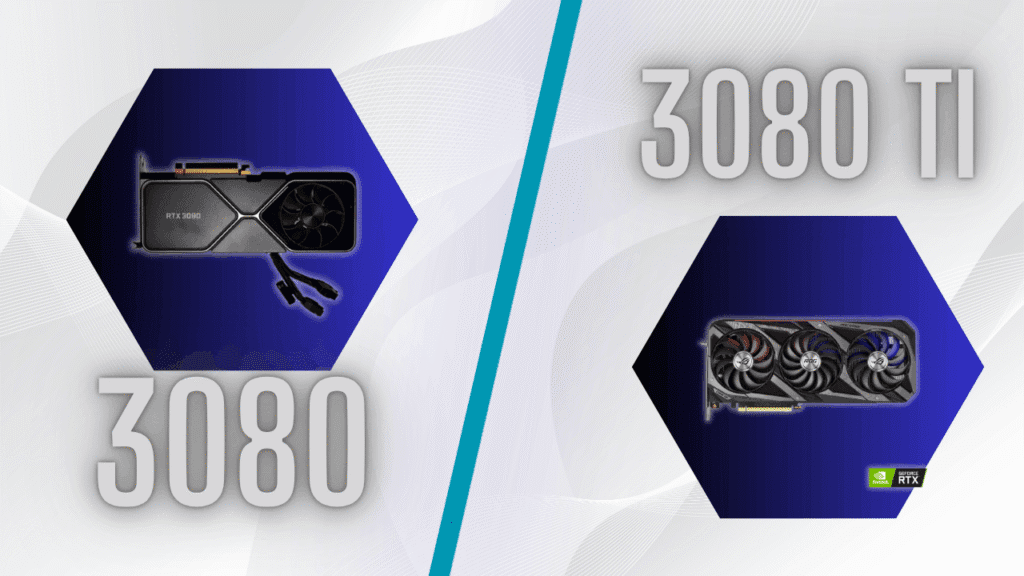
The RTX 3080 Ti is around 5–10% faster than the RTX 3080 in real gaming performance. The difference is smaller at 1440p and more noticeable at 4K, where the Ti’s extra CUDA cores and memory bandwidth help.
- 1440p Gaming: The difference is usually only 2–4 FPS, making both cards perform very similarly.
- 4K Gaming: The RTX 3080 Ti gains around 3–7 FPS in demanding titles like Cyberpunk 2077 and Microsoft Flight Simulator.
- Minimum FPS: The 3080 Ti maintains slightly better frame consistency in heavy scenes.
- Ray Tracing: The extra CUDA cores give the 3080 Ti a bigger advantage in ray-traced games.
- DLSS Support: Both cards only support DLSS 2; neither has DLSS 3 Frame Generation.
- Real-World Difference: The performance gap is noticeable in benchmarks but small during normal gaming.
How They Compare in Real 4K Gaming?
Get the RTX 3080 for most 4K gaming. Choose the RTX 3080 Ti only if you play at native 4K ultra settings without DLSS and want the highest possible FPS.
Why the RTX 3080 wins:
- The RTX 3080 Ti is only about 3–7 FPS faster in demanding 4K titles like Cyberpunk 2077 and Microsoft Flight Simulator.
- With DLSS Quality mode enabled, the performance gap becomes small enough that most players won’t notice it.
- The RTX 3080 still delivers excellent native 4K performance at high and ultra settings.
- You get nearly the same gaming experience while spending significantly less on the GPU.
- The RTX 3080 runs cooler and uses less power, making it easier to build around.
- The RTX 3080 Ti makes sense mainly for enthusiasts chasing maximum 4K performance without any upscaling.
What are the Benchmarks of RTX 3080 and 3080Ti?
Numbers settle arguments faster than opinions do, so let’s look at where the frames actually land. Across a wide spread of titles, the 3080 Ti pulls ahead by roughly 5–10% in real gameplay and around 11% in synthetic benchmarks like 3DMark. That’s a real gap—just not one most people will notice mid-match.
What is the Power Consumption Difference between them?
Get the RTX 3080 if you want a cooler, more efficient build. The RTX 3080 Ti offers more performance, but the extra power draw usually isn’t worth the added heat for most gamers.
Why the RTX 3080 wins:
- Uses 320W TDP compared to the 3080 Ti’s 350W, resulting in lower heat output.
- Requires less cooling capacity, making it a better fit for smaller or airflow-limited cases.
- Consumes less power during long gaming sessions, saving a small amount over time.
- Many factory-overclocked RTX 3080 Ti models can draw significantly more than their rated power.
- Lower temperatures can help maintain quieter fan speeds during heavy workloads.
- The RTX 3080 delivers similar gaming performance without the extra thermal and power demands.
Which 3080 Wins on TDP?
Get the RTX 3080 if you want easier power requirements and lower upgrade costs. The RTX 3080 Ti is faster, but its higher power draw can require a more expensive PSU upgrade.
Why the RTX 3080 wins:
- Runs at 320W TDP compared to the 3080 Ti’s 350W, creating less heat inside your system.
- Works well with a 750W PSU, while the RTX 3080 Ti is better paired with an 850W PSU.
- Avoids extra upgrade costs if your current power supply is already sufficient.
- Produces less strain on your components during long gaming sessions.
- Makes more sense for gamers upgrading older PCs with limited PSU capacity.
- The RTX 3080 Ti’s extra performance may not justify the additional power requirements for most users.
What is the VRAM and Power Draw of RTX 3080 and 3080 Ti?
Get the RTX 3080 Ti if you need extra VRAM for 4K ultra gaming. For most 1440p gamers, the RTX 3080 is still the smarter choice because it uses less power and costs less.
Why the RTX 3080 Ti is selected for VRAM:
- Offers 12GB GDDR6X compared to the RTX 3080’s 10GB, giving more headroom for demanding AAA games.
- The wider 384-bit memory bus provides higher bandwidth, which helps in 4K workloads.
- Better handles texture-heavy games at 4K ultra settings where 10GB VRAM can become a limitation.
- More suitable for memory-heavy workloads like rendering, AI tasks, and content creation.
- The extra VRAM improves long-term usability compared to the 10GB RTX 3080.
- The trade-off is higher power usage (350W vs 320W), more heat, and a bigger PSU requirement.
Comparison Between RTX 3080 and 3080Ti
Beyond the raw specs, the real differences show up in specific buying scenarios—Founders Edition vs AIB cards, desktop vs laptop chips, and the narrower 10GB-to-10GB matchups. Here’s how the comparison holds up when you get more specific than “which one’s faster.”
3080 vs 3080 Ti Founders Edition
Get the RTX 3080 Founders Edition. The RTX 3080 Ti FE is faster, but the extra $100–150 price premium is hard to justify for only a 5–10% performance gain.
Why RTX 3080 FE is better:
- Better price-to-performance ratio on the used market.
- Runs slightly cooler due to lower power consumption.
- Delivers nearly the same gaming experience as the 3080 Ti FE.
- Avoids paying a large premium for a small FPS increase.
- Both use Nvidia’s flow-through cooler design, so cooling differences are minimal.
- Third-party AIB models can offer better cooling than both FE cards.
EVGA FTW3 3080 vs 3080 Ti
Get the RTX 3080 FTW3. The 3080 Ti FTW3 is slightly faster, but the extra performance does not justify the higher used price and warranty risk.
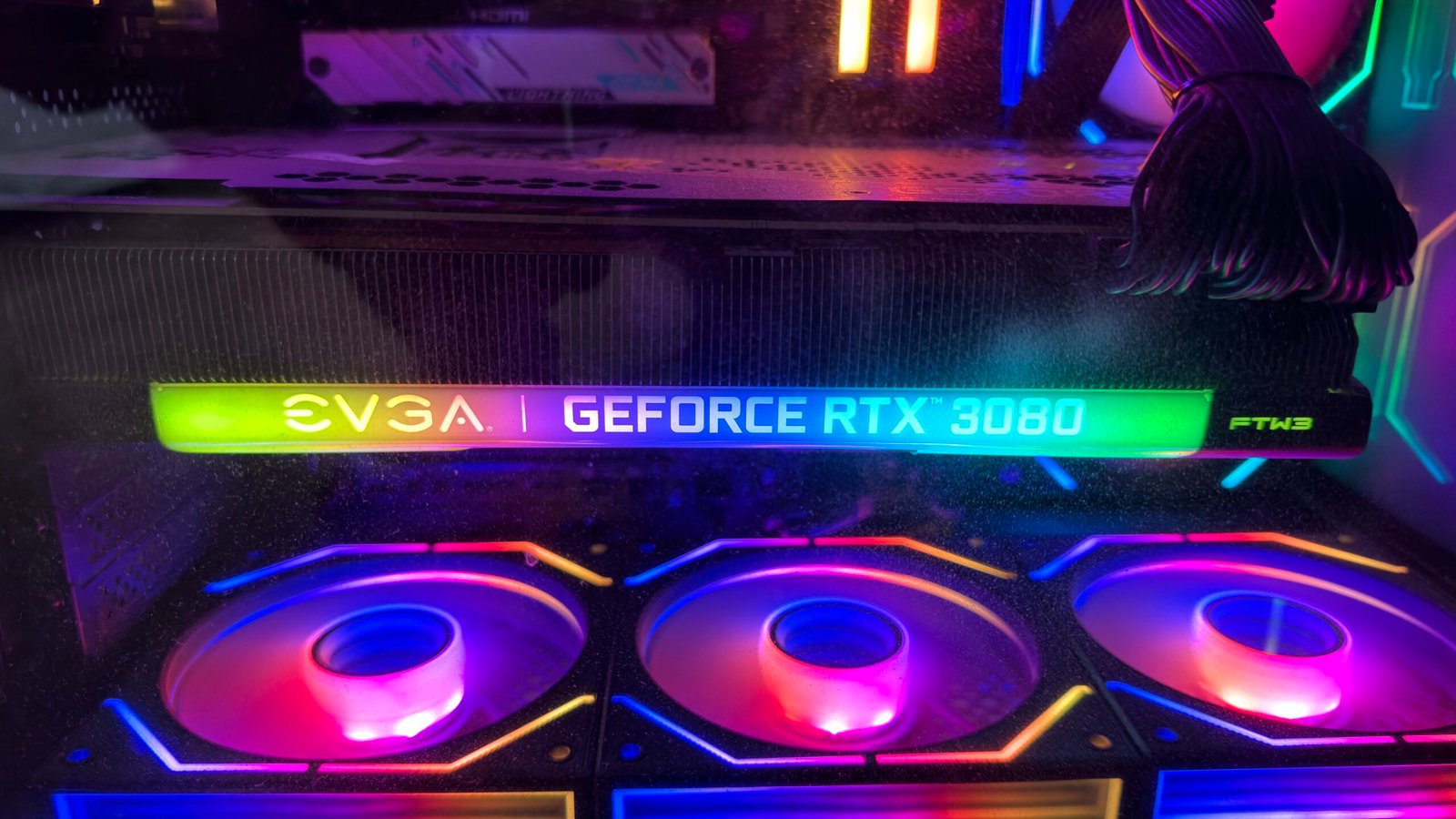
My EVGA RTX 3080
Why RTX 3080 FTW3 is better:
- Better value on the used market compared to the 3080 Ti FTW3.
- The 3080 Ti FTW3 only adds around 1–3% extra performance over the standard Ti model.
- Both cards are already older, making warranty availability an important factor.
- EVGA no longer makes GPUs, so used FTW3 cards have limited support options.
- The RTX 3080 FTW3 provides strong cooling and performance without the Ti premium.
- Better choice if you want a reliable used GPU without overspending.
3080 10GB vs 3080 Ti
Get the RTX 3080 10GB. It offers the best value for most gamers, while the 3080 Ti only makes sense for specific 4K and professional workloads.
Why RTX 3080 10GB is superior:
- Delivers 90–95% of the RTX 3080 Ti’s performance for a much lower price.
- The 5–10% FPS difference is barely noticeable in most games.
- Perfect choice for 1440p gaming, where the VRAM difference rarely matters.
- Uses less power and produces less heat than the 3080 Ti.
- Better price-to-performance ratio on the used market.
- Choose the 3080 Ti only for 4K ultra textures, AI workloads, or GPU-heavy content creation.
RTX 3080 vs 3080 Ti Laptop
Get the RTX 3080 laptop with higher TGP. Laptop GPU performance depends more on power limits and cooling than the GPU name itself.
Why the RTX 3080 Laptop is better:
- A high-TGP RTX 3080 laptop can outperform a low-TGP RTX 3080 Ti laptop.
- Laptop GPU names do not represent the same performance as desktop versions.
- TGP (Total Graphics Power) has a bigger impact on FPS than the Ti branding.
- RTX 3080 laptops often offer better value on the used market.
- Both GPUs are limited by laptop cooling and power constraints.
- Always check the TGP, cooling system, and laptop model before buying.
Quick Score Table
| Category | Winner | Reason |
|---|---|---|
| Gaming Performance | RTX 3080 Ti | 5–10% faster in real gaming |
| 1440p Gaming | RTX 3080 | Similar FPS with better value |
| 4K Gaming | RTX 3080 Ti | 3–7 FPS advantage in demanding games |
| Power Consumption | RTX 3080 | Lower 320W TDP |
| VRAM | RTX 3080 Ti | 12GB vs 10GB |
| Price-to-Performance | RTX 3080 | Much cheaper for similar performance |
| Ray Tracing | RTX 3080 Ti | More CUDA cores |
| PSU Requirements | RTX 3080 | 750W recommended vs 850W |
| Founders Edition | RTX 3080 | Better value |
| EVGA FTW3 | RTX 3080 | Lower price and less risk |
| AI/Rendering | RTX 3080 Ti | More VRAM and CUDA cores |
| Laptop | Depends | TGP matters more than GPU name |
What is the Price of RTX 3080 and 3080Ti?
Both GPUs are discontinued and live exclusively in the used market now. Because most cards have spent several years in service, buyers should check temperatures, fan condition, and seller return policies before purchasing. As of mid-2026:
- RTX 3080 (10GB): ~$250–$350 depending on brand and condition
- RTX 3080 (12GB): ~$300–$400 (closer gap to Ti, better value play)
- RTX 3080 Ti: ~$400–$500
At typical pricing, the 3080 Ti costs roughly 40–60% more than the standard 3080 for a 5–10% performance gain. That math simply doesn’t work in most builds. Moreover, the RTX 4080 Super is available, which outperforms both by a meaningful margin and adds DLSS 3 frame generation.
So if you’re spending $450+ on a used GPU, it’s worth pausing to compare against new RTX 40-series options before pulling the trigger.
Top Companies That Provide RTX 3080 and 3080 Ti
Nvidia doesn’t sell the RTX 3080 or 3080 Ti directly (outside of its own Founders Edition)—its “Add-In Board” (AIB) partners build and sell the retail cards. On the used market today, the most commonly found brands are
| Manufacturer | Popular RTX 3080 / 3080 Ti Series | Notes |
|---|---|---|
| ASUS | ROG Strix, TUF Gaming | Known for strong cooling and premium pricing |
| MSI | Gaming X Trio, Ventus | Good balance of cooling and value |
| Gigabyte | Aorus Master/Xtreme, Gaming OC, Eagle | Wide range from budget to flagship |
| EVGA | FTW3, XC3, SC | Discontinued GPU manufacturing in 2022: used units have no ongoing warranty support |
| Zotac | Trinity, AMP, AMP Extreme | Common in compact/SFF builds |
| Palit / Gainward | GameRock, GamingPro, Phoenix | Popular in Europe and Asia |
| Colorful | iGame, Vulcan | Mostly sold in Asian markets |
| Galax / Galaxy | SG, EX Gamer | Region-specific availability |
| PNY | XLR8 | Primarily US retail |
| Inno3D | iChill | Niche availability, mostly Europe/Asia |
Buying tip: Since both GPUs are discontinued, focus less on brand prestige and more on cooler condition, fan noise, and whether the seller can confirm the card’s usage history this matters more than the AIB name on used units.
Which One Should You Buy?
Buy the RTX 3080 if:
- You’re gaming at 1440p on a high-refresh-rate monitor
- You want the best price-to-performance ratio on the used market
- Your PSU is 750W, and you don’t want to upgrade it
- You use DLSS because it essentially closes the gap entirely
Buy the RTX 3080 Ti if:
- You’re gaming at 4K native with ultra textures and no DLSS
- You found a unit priced within $50–75 of the 3080
- You run Stable Diffusion or light AI inference locally and the extra CUDA cores and VRAM meaningfully matter
- You’re a content creator doing Blender renders or DaVinci Resolve work where GPU compute scales
For CPU pairing, both cards respond well to modern mid-range processors. If you’re building around these GPUs and also deciding on your processor, check out our AMD Ryzen 5 7600X vs Ryzen 5 9600X comparison — the 9600X in particular is a strong pairing that avoids CPU bottlenecks at 1440p.
And if you’re wondering whether to go with Ryzen 5 in general, our guide on AMD Ryzen 5 for gaming covers exactly that.
People Also Ask For
Only if you caught it near Founders Edition pricing—otherwise its resale value hasn’t held up much better than the standard 3080’s.
The Ti has more CUDA cores, 12GB vs 10GB VRAM, and a wider memory bus—for roughly 5–10% more real-world performance.
Performance-wise, it lands closest to the RTX 4070, though the 4070 adds DLSS 3 Frame Generation.
No. Both use DLSS 2, which handles resolution upscaling but lacks Frame Generation. That feature requires RTX 40-series hardware or newer.
Not really—its 12GB VRAM is already tight for some 2026 titles at 4K ultra, and it lacks DLSS 3.
My Final Verdict on RTX 3080 Vs 3080Ti
In the RTX 3080 vs 3080 Ti debate, the winner for most buyers is clear: the RTX 3080 delivers the better deal—strong 1440p and capable 4K performance at a significantly lower price. The 3080 Ti makes sense only if the price gap is minimal or your workload genuinely benefits from the extra CUDA cores and VRAM.
Both cards are aging Ampere architecture, so if your budget allows, also compare them against current RTX 40-series GPUs—you might be surprised at the value there.
If you are interested in a more budget-friendly RTX card, you should consider reading our 3060 vs 3060 Ti guide.
