
When I was researching for the RTX 5080, one card kept appearing right beside it: the RTX 5070 Ti. Curious why, I dug into the RTX 5070 vs 5070 Ti specs and gaming benchmarks. Then it made sense.
I had assumed the standard 5070 would perform almost the same. I was wrong, and the gap is bigger than the names suggest.
In this guide, I’ll break down the real spec differences, 1440p and 4K results, current prices and the VRAM issue. By the end, you’ll know which card fits your monitor, budget and games.
What’s My Recommendation as a Gamer?
I recommend choosing the RTX 5070 Ti if your budget allows. Its 16 GB of GDDR7 VRAM matches the RTX 5080, which should keep it comfortable for the next three to four years, and lets you max out 1440p and even try entry-level 4K.
If you have the budget, pick the Ti without hesitation.
Quick decision guide
- Pick the RTX 5070 Ti for maxed 1440p, entry-level 4K or a card you keep for years.
- Pick the RTX 5070 for 1080p, standard 1440p or when the Ti costs too much.
What Is the Nvidia RTX 5070?
The Nvidia GeForce RTX 5070 and RTX 5070 Ti are desktop graphics cards from Nvidia’s RTX 50 Series, built on the Blackwell architecture. Both support DLSS 4 and 5, multi-frame generation, ray tracing, and GDDR7 memory.
The RTX 5070
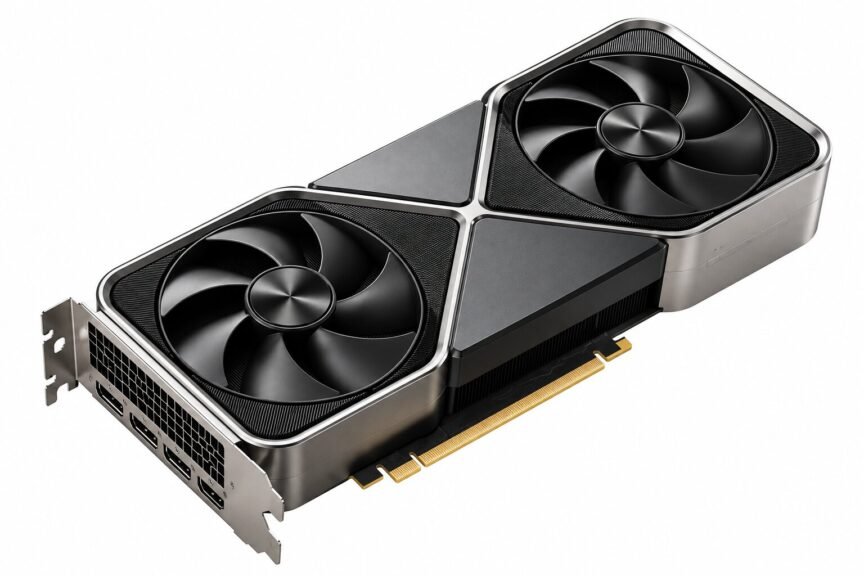
The RTX 5070 is Nvidia’s card for 1440p gaming. It uses the smaller GB205 chip with 6,144 CUDA cores, 12 GB of GDDR7 and a 250 W power limit (TechSpot).
Best for: 1080p and 1440p high-refresh play, plus compact builds.
Problem: 12 GB leaves little headroom for ultra textures plus ray tracing.
The RTX 5070 Ti
The RTX 5070 Ti is a card built to max out 1440p and start on 4K. It uses the larger GB203 chip family that also powers the RTX 5080, with 8,960 CUDA cores and 16 GB of GDDR7.
Best for: maxed 1440p, entry-level 4K and streamers.
Issue: Partner cards run long. Corsair’s launch-era list of 5070 Ti models spans roughly 303 mm to 360 mm, so measure your case.
When Did They Launch?
The NVIDIA GeForce RTX 5070 Ti launched on February 20, 2025, and the RTX 5070 followed on March 5, 2025. Nvidia still lists both on its RTX 50 Series page.
The Specifications Difference
Here is how the two cards compare using Nvidia’s official specifications.
| Spec | RTX 5070 | RTX 5070 Ti | Difference |
|---|---|---|---|
| CUDA cores | 6,144 | 8,960 | +46% |
| Tensor cores | 5th gen, 988 AI TOPS | 5th gen, 1,406 AI TOPS | +42% |
| RT cores | 4th gen, 94 TFLOPS | 4th gen, 133 TFLOPS | +41% |
| Boost / base clock | 2.51 / 2.33 GHz | 2.45 / 2.30 GHz | Near equal |
| VRAM | 12 GB GDDR7 | 16 GB GDDR7 | +4 GB |
| Memory bus | 192-bit | 256-bit | Wider |
| Bandwidth | 672 GB/s | 896 GB/s | +33% |
| TGP | 250 W | 300 W | +50 W |
| Recommended PSU | 650 W | 750 W | +100 W |
| Max GPU temp | 85°C | 88°C | +3°C |
| NVENC encoders | 1x ninth gen | 2x ninth gen | +1 |
Takeaway: The Ti wins on width, not speed. Both support DLSS 4, and Nvidia’s page also lists DLSS 5 for RTX 50 Series GPUs, so check each game for support.
What Is the Main Difference Between 5070 and 5070 Ti?
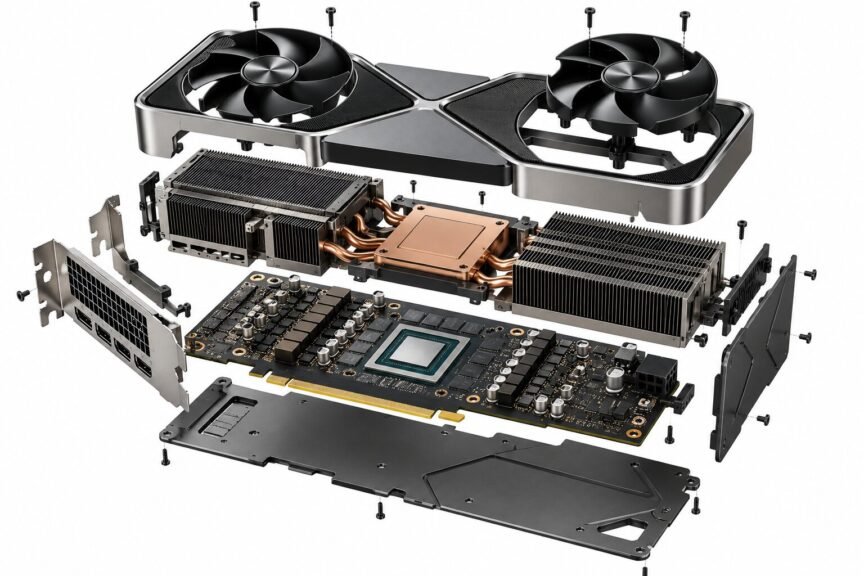
Four differences explain nearly every result here: VRAM, shader count, power draw and the use case Nvidia aimed each card at.
1. The VRAM Difference
The Ti has 16 GB of GDDR7 and the 5070 has 12 GB. Most 1440p games fit in 12 GB today. Ultra textures, ray tracing and 4K can push past it, which is where the extra 4 GB matters. For capacity by resolution, read our guide on how much VRAM you need for gaming.
What the extra 4 GB gives you
- Room for ultra textures and ray tracing at 1440p
- A smoother 4K experience
- The same 16 GB as the RTX 5080, though the 5080 has more bandwidth (960 vs 896 GB/s)
Real-world example: A heavily modded RPG with high-resolution texture packs can overflow 12 GB at 1440p. The Ti absorbs that.
Important: Extra VRAM adds no frames in games that already fit in 12 GB.
2. Cores & Memory
The Ti has 46% more CUDA cores and 33% more memory bandwidth. Its 256-bit bus feeds those cores faster than the 5070’s 192-bit bus.
What that means
- Stronger ray tracing and AI performance
- Two NVENC encoders instead of one, useful for streaming and video exports
3. TGP Difference
The Ti draws up to 300 W, and the 5070 up to 250 W. Nvidia recommends a 750 W power supply for the Ti and 650 W for the 5070, based on a Ryzen 9 9950X test system.
Power checklist
- Both need two 8-pin cables (adapter included) or a 300 W+ PCIe Gen 5 cable
- Some guides suggest 850 W for the Ti, but Nvidia’s minimum is 750 W
- A high-end CPU raises your real need, so leave headroom
4. Use Case Difference
The RTX 5070 is made for 1440p gaming. The Ti is made to max out 1440p and begin entry-level 4K. Both can play 4K with DLSS, but the Ti does it more comfortably.
- 1080p high refresh: 5070 is excellent, Ti is overkill for most
- 1440p high settings: both are excellent
- Maxed 1440p with ray tracing: Ti has the VRAM headroom
- 4K: 5070 is playable with DLSS; Ti is the better fit
Gaming Benchmarks
These numbers come from a 13-game test on a Ryzen 7 9800X3D, which limits CPU bottlenecks.
1440p Gaming
At 1440p, the 5070 Ti averaged 163 fps against 134 fps for the 5070. Both clear 100 fps in most games, so the gap matters most at maxed settings and with ray tracing.
| 1440p test | RTX 5070 | RTX 5070 Ti |
|---|---|---|
| 13-game average | 134 fps | 163 fps |
| Red Dead Redemption 2 | 119 fps | 142 fps |
| Cyberpunk 2077 Ultra | 75 fps | 94 fps |
| Esports average | 122 fps | 155 fps |
In esports titles, that is the difference between missing and beating a 144 Hz monitor.
1440p Gaming Winner: RTX 5070Ti
4K Gaming and Ray Tracing
At 4K, the Ti averaged 97 fps against 77 fps, a 26% lead. In native 4K Cyberpunk 2077 it was 42% faster, at 34 fps versus 24 fps.
| 4K test | RTX 5070 | RTX 5070 Ti |
|---|---|---|
| 13-game average | 77 fps | 97 fps |
| Red Dead Redemption 2 | 76 fps | 96 fps |
| Ray tracing titles | 45–56 fps | 56–70 fps |
Neither card handles native 4K path tracing well, so use DLSS and Multi Frame Generation. Reviews also put the Ti about 10–16% behind the RTX 5080.
4K Gaming Winner: RTX 5070Ti
Who Is the Gaming Winner?
The RTX 5070 Ti wins every performance test. The RTX 5070 wins on price and power. For full 1080p and light 1440p, I’d buy the standard 5070 because it’s built for that. For full 1440p at max settings or light 4K, I recommend the 5070 Ti.
What Are the Prices of the 5070 and 5070 Ti?
The launch MSRP was $549 for the RTX 5070 and $749 for the RTX 5070 Ti. You won’t find those prices easily today. In September 2026, tracked listings sat near $703 for the 5070 and $1,033 for the Ti.
Note: Prices may fluctuate time to time, so please verify them before making any purchases.
Avoid overpaying: compare several retailers. Factory overclocks usually add only 1–3% in real games, so skip big premiums for them.
RTX 5070 vs 4070
The RTX 5070 clearly beats the RTX 4070, and the 5070 Ti clearly beats the 4070 Ti. TechRadar measured a roughly 20–25% gain for the 5070 over the 4070. I saw the 5070 Ti lead the faster 4070 Ti Super by 21–24% in 3DMark.
| Matchup | Winner | Gain |
|---|---|---|
| 5070 vs 4070 | 5070 | ~20–25% |
| 5070 vs 4070 Super | 5070 | ~5% overall |
| 5070 Ti vs 4070 Ti Super | 5070 Ti | 21–24% (3DMark) |
Multi-frame generation is exclusive to RTX 50 cards. Shopping used? Our RTX 4080 vs 4080 Super comparison covers that older tier, but those cards lack Multi Frame Generation.
One Important Thing About the RTX 5070
While watching reviews for this comparison, a Hardware Unboxed YouTube video caught my attention. The reviewer called the standard 5070 underwhelming. His main complaint was the small gap over the 4070 Super, and he disliked the 12 GB of VRAM too.
TechRadar measured roughly 5% overall over the 4070 Super, and the 5070 launched $50 below the 4070 Super’s $599 price. That is why he said it was neither a card to reject nor accept, since there were few options.
I think he’s mostly right. Waiting a full year on a 4070 Super for a 5% upgrade isn’t worth it. The 5070 Ti fixes both problems with 16 GB of VRAM and a real performance jump.
Buying Mistakes People Overlook
- Ignoring card length: Measure your case before buying a Ti.
- Skipping the PSU check: Confirm wattage and connectors first.
- Pairing with an old CPU: A Ryzen 7 3700X can hold back high-refresh 1440p.
- Buying used blindly: Test it first. Read how to check GPU health.
What Should You Choose?
If you mainly play at 1080p, the 5070 is the best choice, and it also suits normal 1440p. Want maxed-out 1440p, consider the Ti, since its VRAM gives better performance.
If I were you and found a 5070 Ti at a reasonable price, I’d choose it. It has the same 16 GB as the 5080 and lands within 10–16% of it.
| Your situation | My pick |
|---|---|
| 1080p or standard 1440p | RTX 5070 |
| Maxed 1440p or entry-level 4K | RTX 5070 Ti |
| Keeping it 4+ years | RTX 5070 Ti |
| It costs far above $1,000. | RTX 5070 |
Check your monitor, budget and PSU, then pick one. Want to see the top of the stack? Read our RTX 5090 review next.
