Gaming on the go no longer means sacrificing performance. Whether you’re a college student, a remote worker who games after hours, or simply someone who refuses to lug around a 17-inch brick, a mini gaming laptop solves the problem neatly — and in 2026, it does so better than ever.
The 14-inch gaming laptop segment has matured into something genuinely exciting. You can now get RTX 5000-series GPUs, OLED displays hitting over 1,100 nits of brightness, and sub-1.6kg chassis in machines that slip easily into a backpack. The best of them rival mid-range gaming desktops in raw performance — and look far more stylish doing it.
This guide breaks down the top picks, what to look for before you buy, honest trade-offs, and how to decide if a compact gaming laptop is the right move for you.
What Exactly Is a Mini Gaming Laptop?
In the gaming world, “mini” typically refers to the 14-inch form factor — anything smaller than the standard 15–17-inch gaming laptops that dominate the market. These aren’t underpowered budget machines. The best 14-inch gaming laptops in 2026 pack flagship-level GPUs, premium displays, and efficient cooling into a chassis you can comfortably carry all day.
Think of it this way: a few years ago, getting a truly portable gaming laptop meant compromising heavily on GPU tier or thermal performance. That’s no longer true. The engineering has caught up with the ambition, and the results are impressive.
Quick Winner Box
| Category | Pick |
|---|---|
| Best Overall | ASUS ROG Zephyrus G14 |
| Best Premium | Razer Blade 14 |
| Best Value | ASUS TUF Gaming A14 |
| Best OLED Display | ASUS ROG Zephyrus G14 |
| Best for Students | ASUS TUF Gaming A14 |
How We Chose These Gaming Laptops
We evaluated each mini gaming laptop based on gaming performance, thermal management, display quality, battery life, portability, upgradeability, and overall value. We compared manufacturer specifications with professional reviews from trusted sources such as Tom’s Guide and PC Gamer, focusing on real-world gaming performance rather than synthetic benchmarks alone.
Special attention was given to weight, cooling efficiency, screen quality, and long-term usability to identify the best compact gaming laptops available in 2026.
Best Mini Gaming Laptops in 2026
These are the best 3 small gaming laptops for 2026, from best value to premium design.
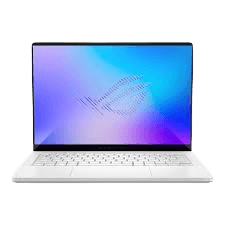
1. ASUS ROG Zephyrus G14 (2026) — Best Overall
The ASUS ROG Zephyrus G14 is one of the best compact gaming laptops in 2026, combining RTX 50-series GPUs, powerful Ryzen AI/Intel processors, and a premium OLED display. It delivers desktop-class gaming performance in a lightweight 1.5kg design with features like Wi-Fi 7, Thunderbolt 4, and a full-size SD card reader.
The one honest complaint: the chassis can get very hot under sustained load, and the fans work hard to compensate. It’s a trade-off you accept when putting this much hardware into a thin frame.
✅ Pros:
- Stunning Nebula OLED display (1,100 nits peak, 100% DCI-P3)
- RTX 5000 GPU options up to RTX 5080 130W
- Wi-Fi 7 (up to 5.8 Gbps) and Thunderbolt 4
- Lightweight at 1.5kg — genuinely portable
- Full-size UHS-II SD card reader — rare at 14-inch
- Excellent I/O selection for a compact machine
❌ Cons:
- RAM is soldered to the motherboard — no user upgrades
- Chassis runs hot under heavy gaming loads
- Fans are loud during sustained gaming
- Premium configurations push well above $2,000
Best for: Gamers who want the best balance of portability, display quality, and raw performance — and have the budget for it.
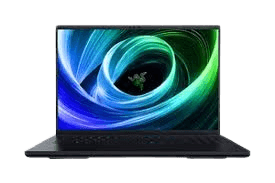
2. Razer Blade 14 (2025) — Best Premium Build
The Razer Blade 14 is the premium choice for gamers who want luxury design, strong performance, and portability. With an RTX 5070, 32GB RAM, 3K OLED display, and CNC aluminum build, it delivers high-end 1440p gaming in a compact form factor.
The downside? Under sustained heavy load, the fans get genuinely loud. And at $2,500+, this is an enthusiast purchase.
✅ Pros:
- Premium CNC aluminum chassis — exceptional build quality
- RTX 5070 GPU — strong performance headroom for 1440p
- 32GB LPDDR5X RAM as standard
- 3K OLED display with vibrant, accurate colors
- Polished Razer software and Chroma RGB ecosystem
❌ Cons:
- Among the priciest compact gaming laptops ($2,500+)
- Fan noise is noticeable under sustained gaming
- Battery life under gaming load is short (1.5–2 hours)
- Limited repairability and upgrade options
Best for: Enthusiasts who want the most premium, stylish mini gaming laptop available and aren’t deterred by the price.
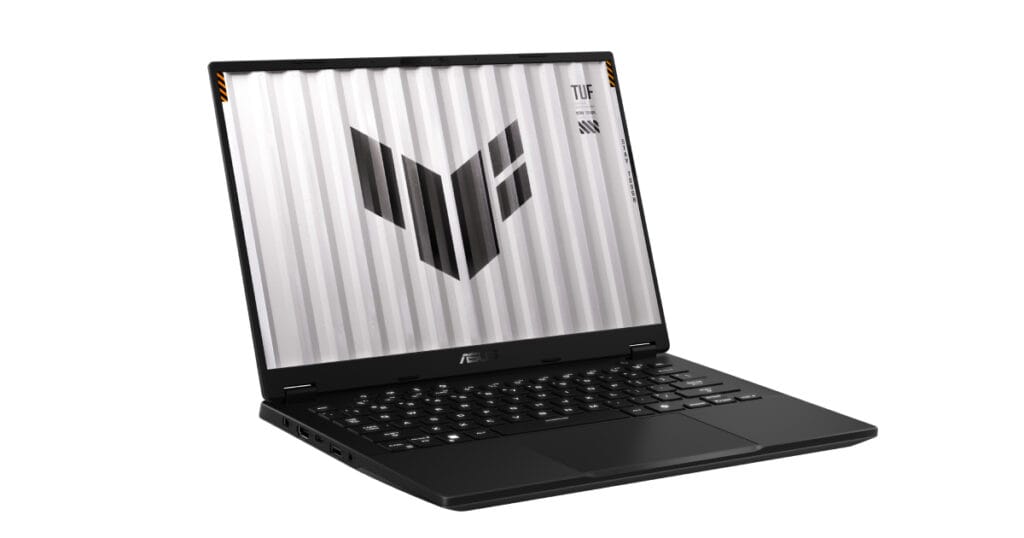
3. ASUS TUF Gaming A14 (2025) — Best Value
The ASUS TUF Gaming A14 is one of the best budget compact gaming laptops, offering RTX 4060 performance, a 165Hz display, and durable MIL-SPEC build quality. It is ideal for esports and 1080p gaming, though the RTX 4060 may struggle with future demanding AAA titles.
✅ Pros:
- Best price-to-performance ratio in the 14-inch category
- RTX 4060 handles 1080p gaming reliably
- 165Hz display — smooth for competitive play
- Military-grade durability (MIL-SPEC 810H)
- Better battery life than most gaming-focused competitors
❌ Cons:
- RTX 4060 has less headroom for demanding future titles
- IPS display can’t match the OLED panels above
- Slightly heavier than the Zephyrus G14
- More utilitarian aesthetics — nothing flashy here
Best for: Value-focused gamers, students, or first-time buyers who want a capable mini laptop gaming experience without the premium price tag.
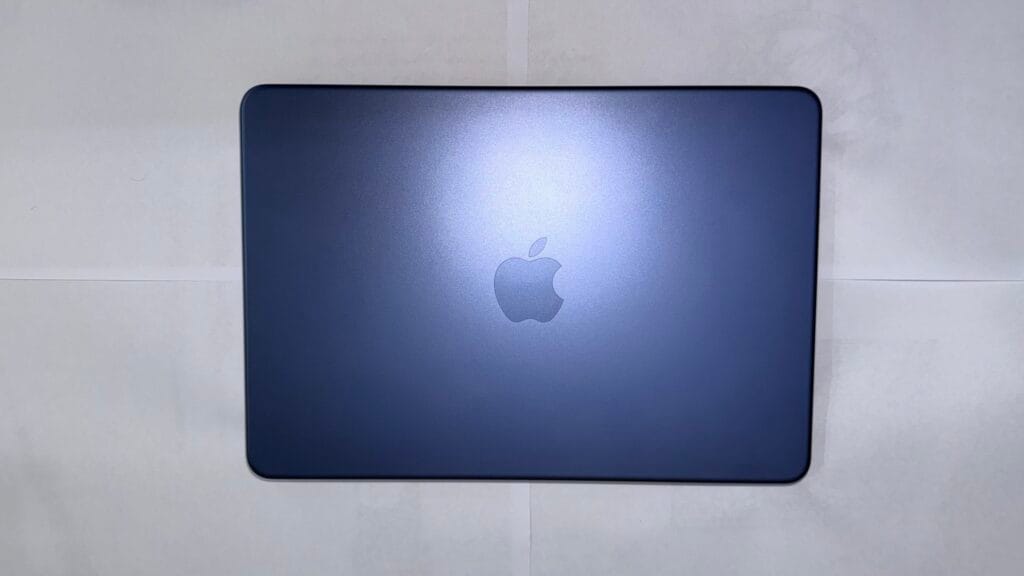
4. MacBook Neo—My Mini Laptop
After spending time with the MacBook Neo, I found it to be a great example of what a compact laptop can offer. Its lightweight design makes it easy to carry throughout the day, while the battery consistently lasts 8–10 hours in my everyday use.
I also played Minecraft and Among Us on it, and both ran smoothly, making it a good option for casual gamers. However, its compact form factor comes with some compromises. The 8GB of unified memory is fine for daily tasks and light gaming, but it isn’t enough for demanding AAA titles or heavier creative workloads.
Pros:
- Compact and lightweight, making it easy to travel with
- Excellent 8–10 hour battery life in real-world use
- Handles light games like Minecraft and Among Us without issues
Cons:
- 8GB RAM limits heavy multitasking and demanding applications
- Not suitable for modern AAA gaming
- Fewer gaming-focused features than Windows gaming laptops
Best For: If your priority is portability with casual gaming, the MacBook Neo performs well, but it isn’t a replacement for a dedicated gaming laptop.
Quick Comparison: Top Mini Gaming Laptops in 2026
| Model | GPU | Display | Weight | Approx. Price |
|---|---|---|---|---|
| ASUS ROG Zephyrus G14 (2026) | RTX 5060–5080 | 3K OLED 120Hz | 1.5 kg | $1,800–$3,000+ |
| Razer Blade 14 (2025) | RTX 5070 | 3K OLED | ~1.6 kg | $2,500+ |
| ASUS TUF Gaming A14 (2025) | RTX 4060 | 165Hz IPS | ~1.65 kg | ~$1,500 |
| MacBook Neo | A18 Pro | 2.4k Liquid Retina | ~1.30 kg | $699 |
Companies That Provide Best Mini Gaming Laptops
When it comes to compact powerhouses, ASUS, HP, Lenovo, Dell, and MSI are leading the charge with mini gaming PCs that pack serious performance into a fraction of the space. Below are some of their best models.
Asus:
ASUS makes some of the most powerful compact gaming laptops on the market:
- ROG Flow Z13
- ROG Zephyrus G14
- TUF Gaming A14
- ROG Strix G16
- Zenbook Gaming Edition
HP:
HP delivers solid performance in a portable gaming form factor:
- Omen Transcend 14
- Omen 16
- Victus 15
- Omen Max 16
- Pavilion Gaming 15
Lenovo:
Lenovo blends portability with strong gaming chops across its lineup:
- Legion Go
- Legion Slim 5
- Legion Slim 7i
- IdeaPad Gaming 3
- Legion Pro 5
Dell:
Dell’s Alienware line pushes compact gaming design to the extreme:
- Alienware x14
- Alienware x16
- Dell G15
- Alienware m16 R2
- Dell G16
MSI:
MSI packs high-end specs into sleek, mini gaming builds:
- MSI Stealth 14
- MSI Katana 15
- MSI Raider GE68
- MSI Titan GT77
- MSI Sword 16
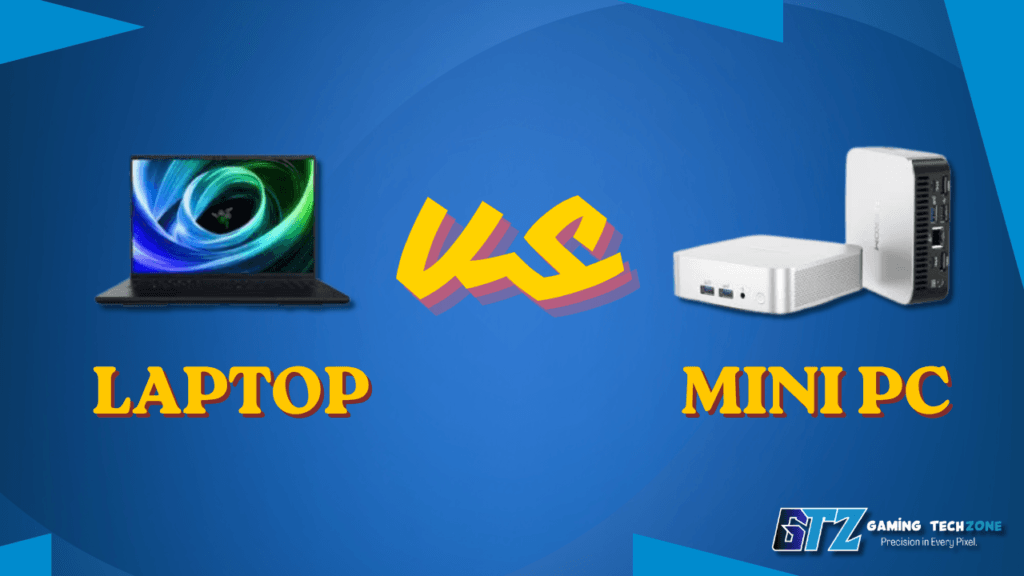
Gaming Laptop vs Mini PC: Which One Should You Choose?
A gaming laptop is the better choice if you need portability, while a mini PC offers better performance and value if you always game at a desk. Choose based on whether mobility or maximum performance matters more.
Gaming Laptop Advantages
- Portable gaming: Play anywhere without needing extra equipment.
- All-in-one setup: Includes a display, keyboard, and trackpad.
- Better for students and travelers: Handles work, study, and gaming in one device.
- No desk dependency: Works without an external monitor or accessories.
Gaming Mini PC Advantages
- Better performance per dollar: More power for the same budget.
- Higher sustained performance: Better cooling allows higher wattage.
- Runs cooler and quieter: Less restricted by compact laptop designs.
- Best for: Users who always game at a fixed desk.
If you’re unsure whether you even need dedicated gaming hardware, our gaming laptop vs normal laptop breakdown covers the key differences clearly.
What to Look for in a Mini Gaming Laptop
Before committing, make sure you’re evaluating these factors:
When choosing a mini gaming laptop in 2026, focus on GPU power, cooling, display quality, RAM capacity, and battery management. The right balance ensures strong performance today and enough headroom for future games.
Key Buying Factors:
- GPU Tier: Choose at least an RTX 5060 for modern gaming; RTX 5070 adds better ray tracing and 1440p performance.
- Thermal Design: Look for vapor chambers, multiple heat pipes, and strong cooling systems for sustained performance.
- Display Quality: OLED offers better colors and contrast, while 165Hz+ IPS panels are better for competitive gaming.
- RAM Configuration: Avoid limited setups; 16GB is the minimum, while 32GB is better for long-term use.
- Battery Life: Expect around 1.5–2.5 hours while gaming; choose models with GPU-switching features for better everyday battery life.
The Real Trade-offs: Honest Pros and Cons of Going Mini
Smaller gaming laptops are genuinely appealing — but they’re not a perfect solution for everyone.
Going compact means accepting:
- Higher chassis temperatures under gaming loads
- Louder fans when pushing the GPU hard
- Less absolute GPU performance vs 15–17-inch equivalents
- Often soldered memory (limits future upgrades)
- A premium price for equivalent performance specs
What you gain:
- A machine that’s actually easy to carry daily
- Better battery life during light tasks
- A laptop that travels without complaints
- Often a more premium-looking chassis design
- Less desk space required
For anyone who wants strong 1080p gaming on a laptop without the bulk of a full-size gaming machine, a 14-inch laptop with an RTX 5060 or RTX 5070 handles most modern titles at high or ultra settings without compromise.
Who Should Buy a Mini Gaming Laptop?
A mini gaming laptop is ideal for:
- College students who carry a laptop daily
- Frequent travelers
- Remote workers who game after work
- Gamers with limited desk space
- Users who want one device for work and gaming
Who Should Skip a Mini Gaming Laptop?
A larger 15-inch or 17-inch gaming laptop may be a better choice if you:
- Prioritize maximum gaming performance
- Want quieter cooling under heavy loads
- Need upgradeable RAM and storage
- Rarely travel with your laptop
People Also Ask For
The ASUS ROG Zephyrus G14 (2026) is the top overall pick. It combines a lightweight 1.5kg chassis with RTX 5000-series GPU options, a 3K OLED display reaching 1,100 nits peak brightness, Wi-Fi 7, and Thunderbolt 4 — all in a genuinely portable package.
Yes. With RTX 5060 or RTX 5070 GPUs, 14-inch gaming laptops in 2026 handle most AAA titles smoothly at 1080p and even 1440p at high settings. The main constraint is thermals — sustained performance may throttle slightly under prolonged load compared to larger laptops with bigger cooling systems.
If portability matters to you, a gaming laptop is the only option. If you’re gaming at a fixed desk setup, a mini PC often delivers more performance for the same budget — better cooling, no battery trade-offs, and more upgradeability. See our dedicated gaming laptop vs mini PC comparison for the full breakdown.
Frequently yes — especially premium models. The Zephyrus G14 and Razer Blade 14 both have soldered RAM that cannot be upgraded. The ASUS TUF A14 offers slightly more flexibility. Always check the specs before purchasing, and buy the RAM configuration you’ll need long-term.
For new buyers in 2026, the RTX 5060 is the recommended entry point. It supports DLSS 4, handles modern AAA titles at 1080p high-to-ultra settings, and offers better longevity than last-gen options. The RTX 4060 (found in value picks like the TUF A14) is still capable at 1080p but will feel the pressure sooner.
Final Words on Mini Gaming PC
The mini gaming laptop category has never been stronger. Whether you opt for the powerhouse ASUS ROG Zephyrus G14 (2026), the premium Razer Blade 14, or the budget-smart TUF Gaming A14, you’re getting more performance in a smaller package than was possible even two years ago.
The right choice depends on your priorities: portability versus value, OLED versus high-refresh IPS, or budget versus top-spec. Use the specs, comparisons, and buying advice above to narrow it down to a machine you’ll still be happy with in three years.
Ready to see the bigger picture? Read our complete guide to the best gaming laptops in 2026 — covering options across every budget and screen size.
Specifications, pricing, and component availability may vary by region and configuration. Always verify the latest details with the manufacturer before purchasing.
Sources References:
- ASUS ROG Zephyrus G14 Official Specifications
- Razer Blade 14 Official Specifications
- Tom’s Guide Gaming Laptop Reviews and Benchmarks
- PC Gamer Gaming Laptop Buying Guides
- NVIDIA GeForce RTX 50-series Laptop GPU Specifications