
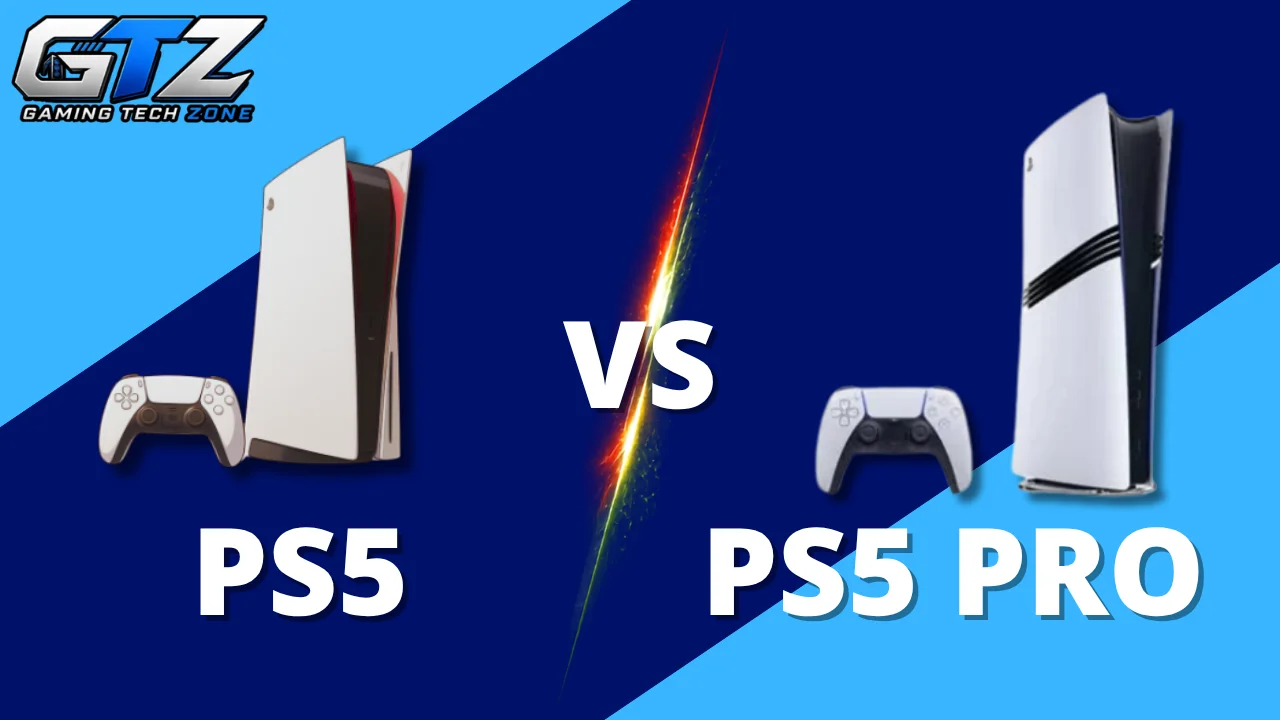
Spending $250–$300 more on a PS5 Pro only makes sense if you can actually benefit from what it offers. That’s where choosing between the PS5 and PS5 Pro gets tricky.
Both consoles play the same PS5 games, but the Pro brings a more powerful GPU, better ray tracing, PSSR upscaling, and twice the storage. The question is whether those upgrades matter for your TV, the games you play, and the way you game.
In this guide, I’ll break down the real differences so you can choose the console that fits your setup without paying for hardware you won’t use.
My Quick Answer
Get the PS5 Pro if you own a 4K/120 Hz TV and want the sharpest possible image in supported games. Its 60-CU GPU is roughly 45% faster than the base console and adds PSSR upscaling plus 2x faster ray tracing.
Get the standard PS5 if you want the identical game library for $250–$300 less. Neither console unlocks games; the other can’t play because the entire gap is graphics power, storage, and price.
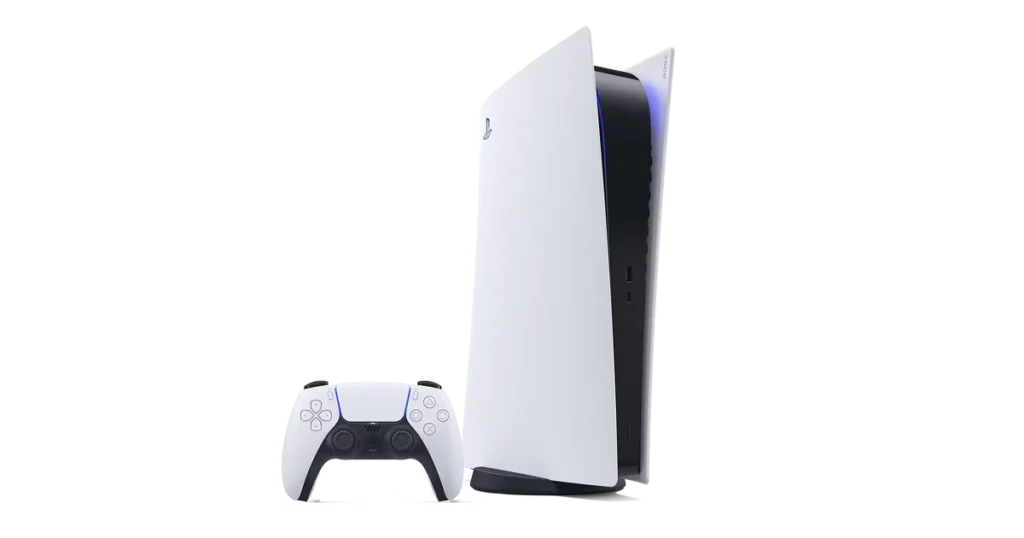
What is PS5?
The standard PS5 (Slim) packs an 8-core AMD Zen 2 CPU, a 36-compute-unit RDNA 2 GPU rated at 10.28 TFLOPS, 16GB of GDDR6 memory, and a 1TB SSD. It delivers strong native 4K performance at 60fps in the vast majority of games.
Best for:
- Players who want the complete PS5 library at the lowest entry price
- Anyone who still buys physical discs or trades games
- Casual and competitive players who mostly use 60fps performance modes
What is PS5 Pro?
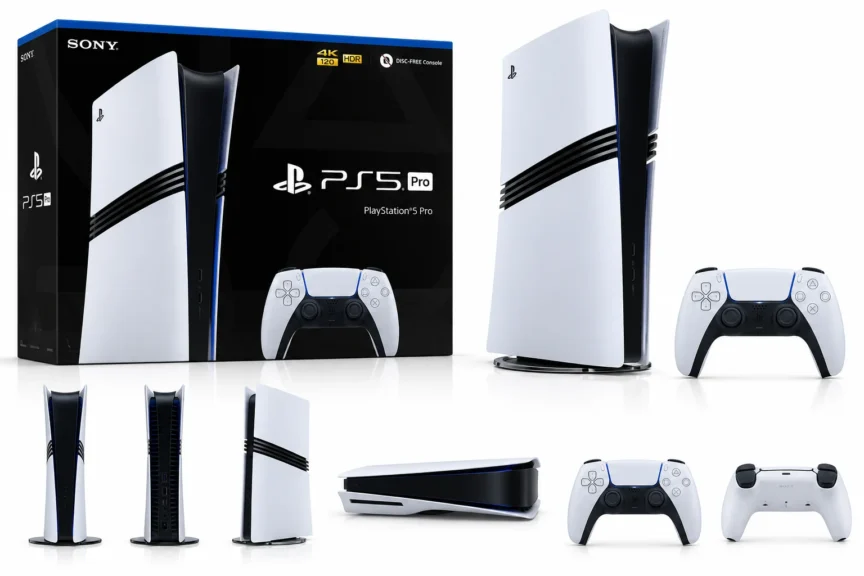
The PS5 Pro swaps in a 60-CU GPU rated at 16.7 TFLOPS, adds PSSR AI upscaling, doubles storage to 2TB, and bumps wireless to Wi-Fi 7. It launched November 7, 2024.
Best for:
- Owners of a large 4K (ideally 120Hz) television
- Players chasing the sharpest image quality in PS5 Pro Enhanced games
- Anyone who wants 2TB of storage without buying an M.2 upgrade
What is The Main Difference Between the PS5 and PS5 Pro?
The main difference between PS5 and PS5 Pro comes down to five things: GPU power, ray tracing, upscaling, storage, and price. Everything else, including the controller, the game library, the OS, and online features, is identical on both consoles. Both consoles are one of the best gaming platforms.
| Difference | PS5 | PS5 Pro |
|---|---|---|
| GPU | 36 CUs, 10.28 TFLOPS | 60 CUs, 16.7 TFLOPS (~45% faster) |
| Ray tracing | Standard | ~2x faster |
| Upscaling | None | PSSR (PSSR 2.0 in 2026) |
| Storage | 1TB | 2TB |
| Disc drive | Built-in (Disc Edition) | Optional add-on (~$79.99) |
1. Design and Build Quality
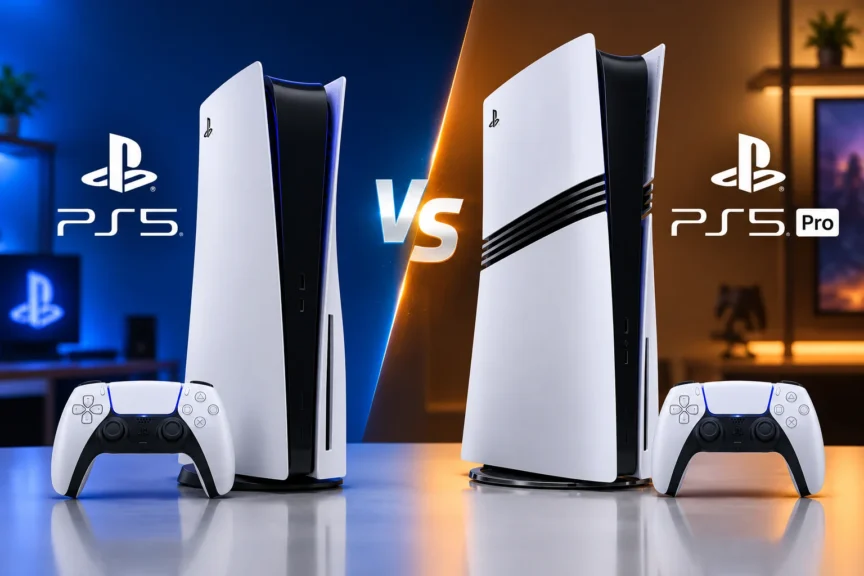
Both consoles keep Sony’s curved, two-tone PS5 look, but the Pro is a taller, more heavily vented box built to house the bigger GPU. Reviewers who’ve torn both down report the Pro’s cooling hardware isn’t dramatically beefier than the Slim’s; the size increase is mostly about airflow, not a fundamentally different thermal system.
- Both use the same detachable side panels and DualSense controller
- The Pro’s triple-stripe design cue carries over from the Slim
Winner: Both are good-looking in design, so it’s a draw.
2. Ray Tracing
PS5 Pro ray tracing runs roughly 2x faster than the base PS5’s, which matters most for reflections, shadows, and global illumination in demanding titles. The base PS5 still supports ray tracing, and it’s just less capable in scenes that lean on it heavily.
- Best for: single-player, story-driven games with reflective surfaces (water, glass, chrome)
- Note: competitive shooters and older titles rarely stress this feature enough for the gap to matter
Winner: PS5 Pro.
3. Physical Disc Slot
The standard PS5 Disc Edition has a built-in 4K Blu-ray disc slot. The PS5 Pro ships without one physical media. Fans need to buy Sony’s external disc drive separately, which adds roughly $79.99 to the total cost.
- Best for physical collectors: the standard PS5 Disc Edition, hands down
Winner: PS5 standard.
4. Size Difference
The PS5 Pro measures about 388 × 89 × 216mm and weighs roughly 3.1kg, while the current PS5 Slim measures about 358 × 97 × 224mm at roughly 3.2kg. The Pro is taller and slightly slimmer front-to-back but marginally lighter overall.
Winner: Again, both are almost the same for design, so it’s a draw.
5. Cooling Efficiency
Reviewers consistently found both consoles run quietly under load, though the Pro’s larger GPU draws more power in demanding, Pro Enhanced titles. Neither console gets loud enough to be distracting during normal play, and both stay far quieter than a gaming PC under equivalent load.
Winner: Draw.
What are The Specifications of PS5 and PS5 Pro?
Side by side, the full PS5 vs PS5 Pro specs sheet shows a nearly identical CPU and memory pool, with the entire gap concentrated in the GPU, storage, and wireless radio.
| PS5 Pro | PS5 | PS5 Pro |
|---|---|---|
| CPU | 8-core/16-thread Zen 2 @ up to 3.5GHz | 8-core/16-thread Zen 2 @ up to 3.85GHz |
| GPU | Custom RDNA 2, 36 CUs | Custom RDNA-based, 60 CUs |
| GPU power | 10.28 TFLOPS | 16.7 TFLOPS |
| Memory | 16GB GDDR6 @ 14Gbps (448GB/s) | 16GB GDDR6 @ 18Gbps (576GB/s) + 2GB DDR5 |
| Storage | 1TB SSD | 2TB SSD |
| Wireless | Wi-Fi 6 | Wi-Fi 7 |
| Price (Sep 2026) | $649.99 disc / $599.99 digital | $899.99 |
These specifications are derived from SONY’s official website.
1. CPU
Both consoles run the same 8-core, 16-thread AMD Zen 2 processor, with the Pro adding only a modest high-frequency mode (about 10% higher clock). This is why heavily CPU-bound games, dense simulations, big crowds, and complex AI don’t see much benefit from upgrading.
One thing I found: if a game is CPU-limited on the base PS5, the Pro usually hits the same ceiling.
2. GPU
The GPU is where the entire PS5 vs PS5 Pro gap lives. According to Tom’s Hardware, the 60 compute units at 16.7 TFLOPS on the Pro versus 36 CUs at 10.28 TFLOPS on the base console, a roughly 45% rasterization gain per Sony, plus PSSR upscaling that the standard PS5 lacks entirely.
Best for: graphically demanding, GPU-bound games (open-world, ray-traced titles)
3. Storage & Wifi
The PS5 Pro’s 2TB SSD doubles the base console’s 1TB, which matters given that modern games routinely exceed 100GB installed. Wi-Fi 7 on the Pro also improves download speed and latency over the base PS5’s Wi-Fi 6, provided your router supports it.
Best for: players with large digital libraries who hate juggling installs
If your PS5 keeps dropping its connection after a router change, our guide on fixing a stubborn PS5 DNS error walks through the fix step by step.
What is PSSR on the PS5 Pro?
PlayStation Spectral Super Resolution is Sony’s machine-learning image upscaler, built exclusively for the PS5 Pro’s hardware. It renders at a lower internal resolution and reconstructs a sharper, more detailed image in real time, similar to Nvidia’s DLSS, which helps supported games hit higher, steadier frame rates without visibly losing image quality.
The base PS5 has no equivalent hardware, so this feature is Pro-exclusive and can’t be added to the standard console later. Sony upgraded the model with PSSR 2.0 in March 2026, sharpening reconstruction and reducing the shine that some early titles showed.
Games that support PSSR:
- Final Fantasy VII Rebirth
- Silent Hill 2 and Silent Hill f
- Senua’s Saga: Hellblade II
- Monster Hunter Wilds
- Crimson Desert
- Dragon’s Dogma 2
- Resident Evil Requiem
- Alan Wake 2
- Control
- Dragon Age: The Veilguard
Gaming Experience Comparison
In real games, the PS5 Pro consistently looks a touch sharper and more detailed, textures resolve more cleanly, edges are less jagged, and PSSR reconstruction holds up better in motion.
That said, it’s rarely a night-and-day difference; most players sitting a normal distance from a mid-size TV will notice steadier frame rates more than a dramatically different picture.
- Best for Pro: large 4K displays where PSSR’s clarity gains are easiest to see
- Caveat: non-enhanced games look and run almost identically on both consoles
Which One to Choose For Gaming?
- Choose PS5: If you are on a budget and play games at high settings.
- Choose Pro: If you want ray tracing and a little more performance headroom.
Winner: There is no such major difference in both consoles. Both consoles are performing best for their use. It is upto you whether you want max 4k performance and you have the budget for the pro.
Pros And Cons
PS5 Pros & Cons
| Pros | Cons |
|---|---|
| $250–$300 cheaper than the Pro | 1TB storage fills up fast |
| Built-in disc drive on the Disc Edition | No PSSR upscaling |
| Excellent native 4K/60fps performance | Weaker ray tracing in demanding titles |
PS5 Pro Pros & Cons
| Pros | Cons |
|---|---|
| 60-CU GPU, ~45% faster rasterization | $899.99, before an optional disc drive |
| PSSR upscaling for sharper image quality | No built-in disc drive |
| 2TB SSD and Wi-Fi 7 | Same CPU, so CPU-bound games barely improve |
What is The Price of PS5 and PS5 Pro?
As of September 2026, a standard PS5 costs $649.99 (disc) or $599.99 (digital), while the PS5 Pro costs $899.99, which is a gap of $250 to $300 that widened after Sony’s April 2026 price increase.
Highlights:
- PS5 (Disc, 1TB): $649.99
- PS5 Pro: $899.99
- PS5 Digital Edition: $599.99
- Refurbished PS5 (Disc): $549.99
- Refurbished PS5 Digital Edition: $499.99
These prices only include console prices. You have to buy games additionally. You can buy each game individually or buy a Play Station Plus.
actor in controllers, a headset, or a disc drive add-on before you buy, our breakdown of the full cost of putting together a complete PS5 gaming setup covers exactly what those extras add to either console.
What Should You Buy?
PS5 If:
- Want the complete PlayStation library at the lowest possible price
- Collect physical discs or buy games secondhand
- Play mostly at 60fps on a mid-size or 1080p display
- You’re a first-time buyer entering the PlayStation ecosystem on a budget
PS5 Pro if:
- Own a large 4K TV, ideally with 120Hz and VRR
- Care about image clarity and play a lot of PS5 Pro Enhanced titles
- Want 2TB of storage without an aftermarket SSD upgrade
- Using PSVR2 and want the cleanest possible reconstruction in VR
Who is The Winner Between PS5 vs PS5 Pro?
There’s no single winner because it depends on your setup. For most players, the standard PS5 wins on value: identical games, a built-in disc drive on offer, and hundreds of dollars saved.
For enthusiasts with a high-end 4K display and a library full of Pro Enhanced games, the PS5 Pro wins on capability and is worth the premium.
In my opinion, unless you already know your TV and your favorite games will show off PSSR, the base PS5 is the smarter buy in 2026.
Alternative Option to The PS5 Series
Not only is the PS5 series ideal for gamers because everyone has a different play style.
Which is Better Between PS5 and Xbox Series X/S?
The base PS5 and Xbox Series X are closely matched on paper. Xbox’s 12 TFLOPS GPU is technically ahead of the PS5’s 10.28 TFLOPS, but real-world performance lands close enough that most players won’t notice a difference.
As of September 2026, Xbox Series X (disc) cost $799.99 against the PS5’s $649.99, making the PS5 the cheaper flagship option, while Xbox Series S remains the budget pick at $499.99–$599.99.
- Best for value: PS5, at $150 less than the Xbox Series X
- Best for subscription value: Xbox Series X, thanks to Game Pass
Which is Better Between PS5 Pro and Xbox Series X/S?
The PS5 Pro’s GPU and PSSR upscaling put it clearly ahead of the Xbox Series X/S and lack a comparable AI upscaler, though it now costs $899.99 versus $799.99 for the Xbox Series X disc model.
- Best for raw graphics power: PS5 Pro
- Best for price-to-performance: Xbox Series X, now only $100 behind the Pro
Should You Buy the PS5 or PS5 Pro?
After comparing the specs, the pricing, and how games actually look and run on both consoles, my take is simple: the PS5 Pro is the best PlayStation Sony has ever built, but it’s a luxury upgrade for a specific buyer, not a must-have for everyone.
If you own a 4K/120Hz TV and want the sharpest picture available on a console, the Pro earns its $899.99 price tag. If you just want to play the same games Sony’s whole library offers, the standard PS5 remains the smarter buy at $649.99 or less.
Whichever you choose, you’re picking between two genuinely excellent consoles. The only real mistake is paying Pro prices for a TV that can’t show the difference.
