

So, is AMD Ryzen 7 good? I can answer that from my own rig: I’ve been running a Ryzen 7 9800X3D paired with my EVGA RTX 3080, and it’s been the best CPU experience I’ve had since I built this system.
If you’re trying to figure out whether a Ryzen 7 chip is worth your money — new or a few generations old. In this guide, I’ll explain through every generation what each one is actually good for and how they stack up against Intel and Ryzen 5.
My Honest Experience With Ryzen 7
My Ryzen 7 9800X3D has been rock solid since day one. Paired with my EVGA RTX 3080, it delivers excellent, stable performance across everything I throw at it.
What I’m running it in:
- GTA V (FiveM) and Valorant: both feel butter-smooth with zero stutter
- CS2 on medium-normal settings pushes 300+ FPS thanks to the 3D V-Cache soaking up the game’s cache-heavy demands
- Resident Evil: Requiem on medium settings still runs comfortably
I’m not planning to swap this chip out for another 2 to 3 years, short of something going wrong with the build. For CPU-bound competitive titles especially, this is the kind of headroom that just doesn’t bottleneck your GPU.
What is AMD Ryzen 7 Series?
Ryzen 7 is AMD’s upper-mid-tier desktop CPU line, sitting above Ryzen 5 and below Ryzen 9. It’s built for gamers and creators who want more cores and cache than a Ryzen 5 without paying flagship Ryzen 9 prices.
What Gen Does Ryzen 7 Cover?
Zen, Zen+, Zen 2, Zen 3, Zen 4, and now Zen 5. Each numbered series (2000, 3000, 5000, 7000, 8000G, 9000) maps to a different architecture and performance jump.
What Socket Does it Support?
Ryzen 7 chips split across two sockets. The 1000 through 5000 series use AM4 with DDR4 memory, while the 7000 series onward (including 8000G and 9000) moved to AM5 with DDR5 memory and PCIe 5.0 support.
- AM4
- AM5
When Did Ryzen 7 Series Launched?
AMD launched the very first Ryzen 7 chips on March 2, 2017, marking AMD’s return to competitive high-performance desktop CPUs.
Each AMD Ryzen 7 Series Processors
These are the best chips AMD has ever made in each tier.
Ryzen 7 2000 Series
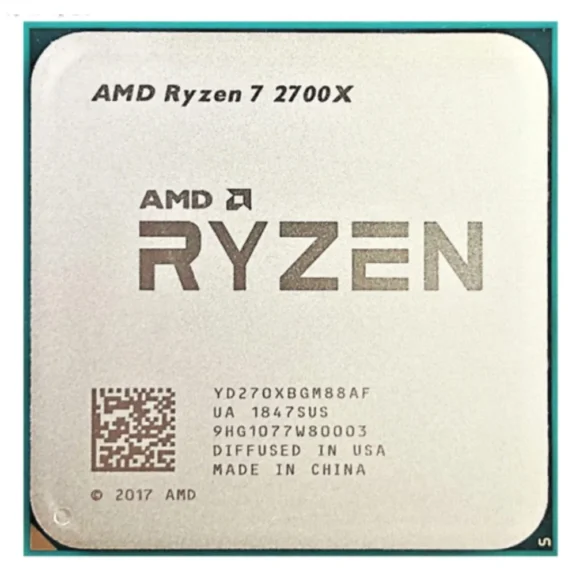
The Ryzen 7 2700X was AMD’s first real shot at Intel’s high-end mainstream chips, an 8-core, 16-thread part on the Zen+ architecture at $329.
Key Details:
- 105W TDP with the bundled Wraith Prism cooler
- Strong multi-core value against Intel’s 8700K at launch
- Long since surpassed for gaming, but still capable for light multitasking
I go deeper on how it holds up today in my full Ryzen 7 2700X review.
Ryzen 7 3000 Series
The Ryzen 7 3700X moved to Zen 2 and 7nm, doubling L3 cache to 32 MB while cutting TDP to just 65 W which was a genuinely efficient 8-core chip for its time.
Key Details:
- Same $329 price as its predecessor, but a big IPC jump
- Still viable today for budget AM4 builds paired with a mid-range GPU
- Outclassed heavily by anything from the 5000 or 7000 series in gaming
Check out the full specs and benchmarks in my Ryzen 7 3700X review.
Ryzen 7 5000 Series
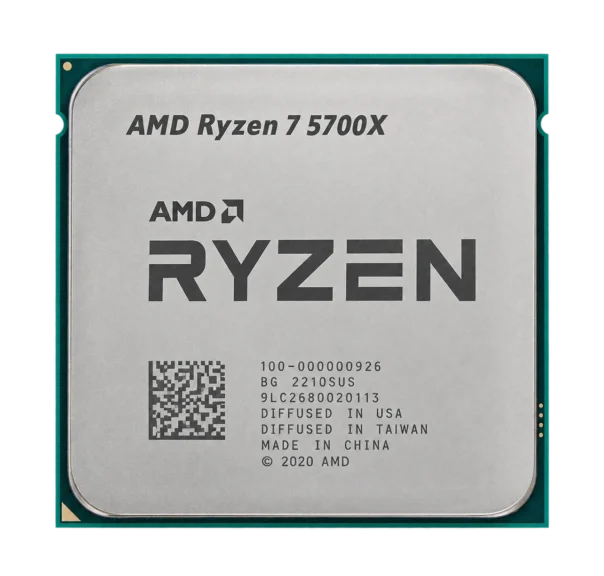
The Ryzen 7 5700X arrived late in the AM4 lifecycle (2022) as a Zen 3 chip built for existing AM4 owners who wanted a drop-in upgrade without new RAM or a new motherboard.
Key Details:
- $299 launch price, cheaper than the 5800X it sits beside
- 65W TDP makes it easy to cool even in compact cases
- One of the best value picks for anyone finishing out an AM4 build
I cover the full upgrade case in my Ryzen 7 5700X review.
Ryzen 7 7000 Series
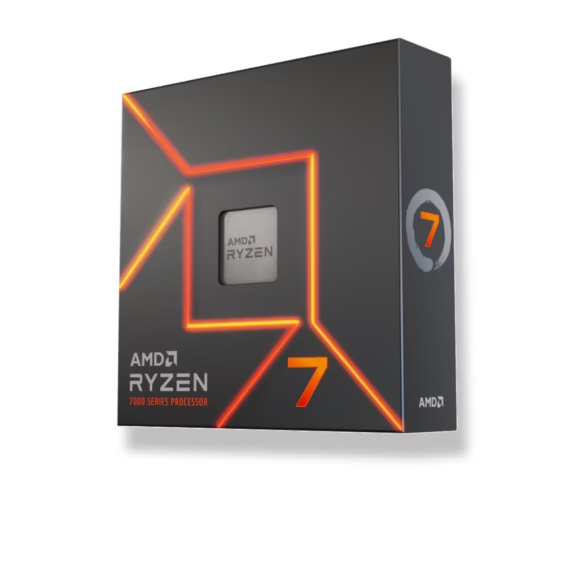
The Ryzen 7 7700X marked AMD’s jump to Zen 4, AM5, and DDR5, with a huge clock speed leap to 5.4 GHz boost and 105 W TDP.
Key Details:
- $399 at launch, positioned as AMD’s best value gamer for 2022–2023
- Requires an AM5 motherboard and DDR5 memory — a full platform change from AM4
- Since eclipsed by the 9700X and 9800X3D on the same platform
See how it compares to its Zen 5 successor in my Ryzen 7 7700X vs 9700X comparison.
Ryzen 7 8000 series
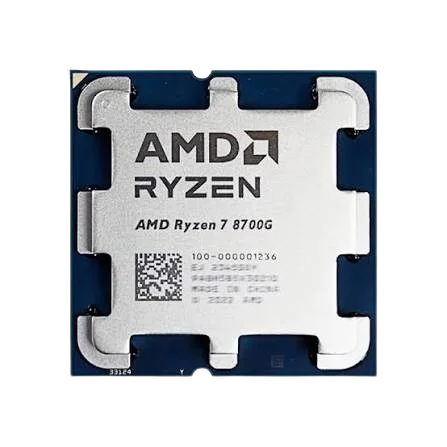
The Ryzen 7 8700G is a bit of an outlier. AMD skipped a standard Ryzen 7 8000 desktop chip and released this as an APU instead, pairing Zen 4 cores with a genuinely capable Radeon 780M integrated GPU.
Key Details:
- $329 launch price, 65W TDP, 16MB L3 cache
- Strong 1080p gaming without a discrete GPU
- Best for compact builds, HTPCs, or a stopgap before adding a graphics card
I break down real-world 1080p performance in my Ryzen 7 8700G review.
Ryzen 7 9000 Series
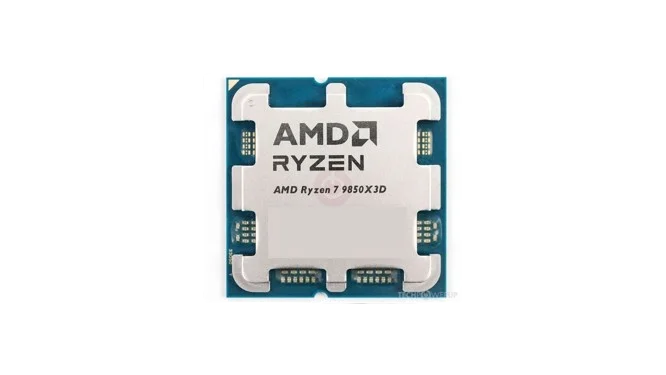
This is the current lineup, and it’s where things get interesting. The Ryzen 7 9700X ($359) is the standard Zen 5 chip, while the Ryzen 7 9800X3D ($479) and the newer Ryzen 7 9850X3D ($499) add AMD’s 2nd-gen 3D V-Cache.
Key Details:
- 9800X3D and 9850X3D both carry 96MB of L3 cache and a 120W TDP
- The 9850X3D only adds a 400MHz higher boost clock (5.6GHz vs 5.2GHz) over the 9800X3D
- The 9800X3D remains the better value pick unless you specifically want the absolute fastest chip available
Read my full Ryzen 7 9850X3D review, and if you’re torn between the two X3D chips, my 9800X3D vs 9850X3D comparison breaks down whether the upgrade is worth it.
What are the Prices of 7 Series Chips?
Here’s how launch pricing has moved across generations (street prices are typically lower today, so always check current retailer listings):
| Chip | Launch Price (USD) | Launch Year |
|---|---|---|
| Ryzen 7 2700X | $329 | 2018 |
| Ryzen 7 3700X | $329 | 2019 |
| Ryzen 7 5700X | $299 | 2022 |
| Ryzen 7 7700X | ~$250 | 2022 |
| Ryzen 7 8700G | $329 | 2024 |
| Ryzen 7 9700X | ~$320 | 2024 |
| Ryzen 7 9800X3D | $479 | 2024 |
| Ryzen 7 9850X3D | $499 | 2026 |
Note: These prices are mostly MSRP. So before making any buying decision, make sure to go check the current street prices yourself.
What are The Specifications of Ryzen 7 Series?
| Chip | Architecture | Cores/Threads | Base/Boost Clock | L3 Cache | TDP | Socket |
|---|---|---|---|---|---|---|
| 2700X | Zen+ | 8/16 | 3.7 / 4.3 GHz | 16MB | 105W | AM4 |
| 3700X | Zen 2 | 8/16 | 3.6 / 4.4 GHz | 32MB | 65W | AM4 |
| 5700X | Zen 3 | 8/16 | 3.4 / 4.6 GHz | 32MB | 65W | AM4 |
| 7700X | Zen 4 | 8/16 | 4.5 / 5.4 GHz | 32MB | 105W | AM5 |
| 8700G | Zen 4 (APU) | 8/16 | 4.2 / 5.1 GHz | 16MB | 65W | AM5 |
| 9700X | Zen 5 | 8/16 | 3.8 / 5.5 GHz | 32MB | 65W | AM5 |
| 9800X3D | Zen 5 + 3D V-Cache | 8/16 | 4.7 / 5.2 GHz | 96MB | 120W | AM5 |
| 9850X3D | Zen 5 + 3D V-Cache | 8/16 | 4.7 / 5.6 GHz | 96MB | 120W | AM5 |
Is Ryzen 7 Series Good For Gaming?
Yes. Ryzen 7 has been a genuinely strong gaming choice since the 5000 series, and the X3D models in the 9000 series are currently the fastest gaming CPUs on the market at any resolution.
For 1080p Gaming
At 1080p, the CPU matters most because the GPU isn’t the bottleneck, and this is where Ryzen 7 X3D chips shine. Independent testing has shown the 9800X3D leading Intel’s Core Ultra 9 285K by roughly 25–35% in CPU-bound 1080p benchmarks, largely thanks to the extra L3 cache.
For 1440p/2K Gaming
At 1440p, the GPU starts sharing more of the workload, so the gap between a 9700X and a 9800X3D narrows in GPU-heavy titles but stays wide in simulation and open-world games with heavy NPC or physics loads.
For Ultra/4K Gaming
At 4K, your graphics card becomes the dominant factor in frame rate, and most Ryzen 7 chips from the 5000 series onward will keep up without bottlenecking a high-end GPU like an RTX 4080 or 5080.
Who Should Choose These CPUs?
2000:
Best for budget AM4 rebuilds or secondhand PCs where the CPU cost needs to stay under $100.
3000:
A solid pick for AM4 builders on a tight budget who still want reasonable multi-core performance for streaming or light editing.
5000:
Ideal if you already own an AM4 motherboard and want the best gaming uplift without switching platforms.
7000:
Good for anyone building fresh on AM5 who wants strong all-round performance without paying X3D prices.
8000:
Best for small-form-factor builds or anyone who wants to game at 1080p with out a specific GPU needed.
9000:
The right choice if you’re building a new gaming PC in 2026 and want the fastest CPU-bound frame rates available today.
Ryzen 7 vs Other CPUs
These are common alternatives which are compared to Ryzen 7 series chips.
Is Ryzen 7 Better Than I7?
For gaming specifically, current Ryzen 7 X3D chips outperform Intel’s competing chips by a clear margin. AMD’s own testing puts the 9850X3D roughly 27% ahead of Intel’s Core Ultra 9 285K on average across dozens of titles.
Worth noting: Intel has largely moved its flagship desktop chips to “Core Ultra” branding, so the classic Core i7 (like the 14700K) now competes more directly with Ryzen 7 on price and core count, where its 20 cores give it an edge in heavily multi-threaded productivity work.
Which is Better Between Ryzen 5 or Ryzen 7?
Ryzen 7 wins if you multitask heavily while gaming, streaming, recording, or running background apps and thanks to its extra cores and threads over Ryzen 5’s typical 6-core setup.
If pure gaming FPS on a tighter budget is the goal, Ryzen 5 often gets you 90% of the performance for noticeably less money. I cover this exact question in more depth in Is AMD Ryzen 5 Good?
Final Verdict: Is AMD Ryzen 7 Worth It?
So, is AMD Ryzen 7 good? Across every generation I’ve covered here, the honest answer is yes and with the caveat that which chip makes sense depends entirely on your platform and budget.
If you’re building fresh today, the Ryzen 7 9800X3D is the smarter buy over the 9850X3D unless price stops mattering to you. If you’re stretching an older AM4 build, the 5700X is still the best last-gen upgrade around.
From my own experience running the 9800X3D daily with an RTX 3080, I wouldn’t hesitate to recommend the current 9000 series to anyone serious about gaming performance. It’s not a chip I plan on replacing anytime soon.
