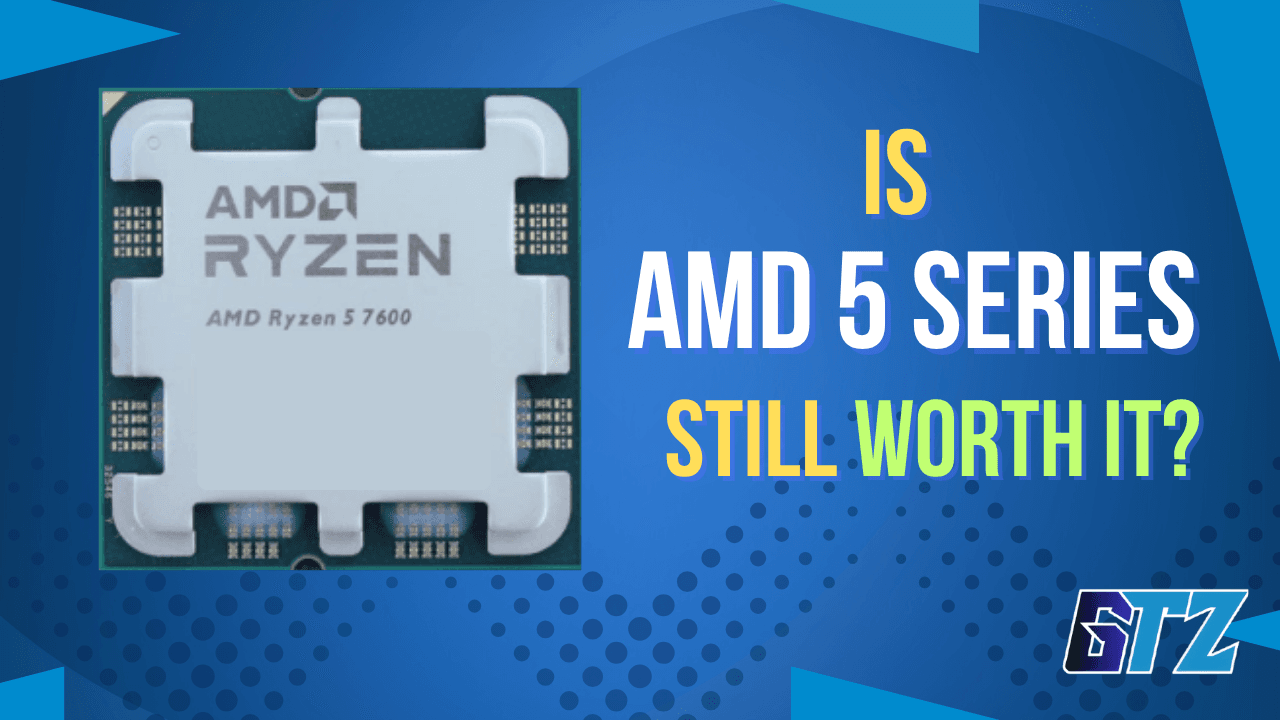
If you’re asking is AMD Ryzen 5 good right now, you’re in the right place — because the answer isn’t just “yes”. It depends on which Ryzen 5, what you’re building, and how much you’re willing to spend.
We’ve analyzed benchmark databases, professional reviews, manufacturer specifications, and real-world user feedback across the latest Ryzen 5 lineup — the 5600X, 7600X, and the brand-new 9600X — and the picture is genuinely exciting for budget-to-mid-range builders in 2026.
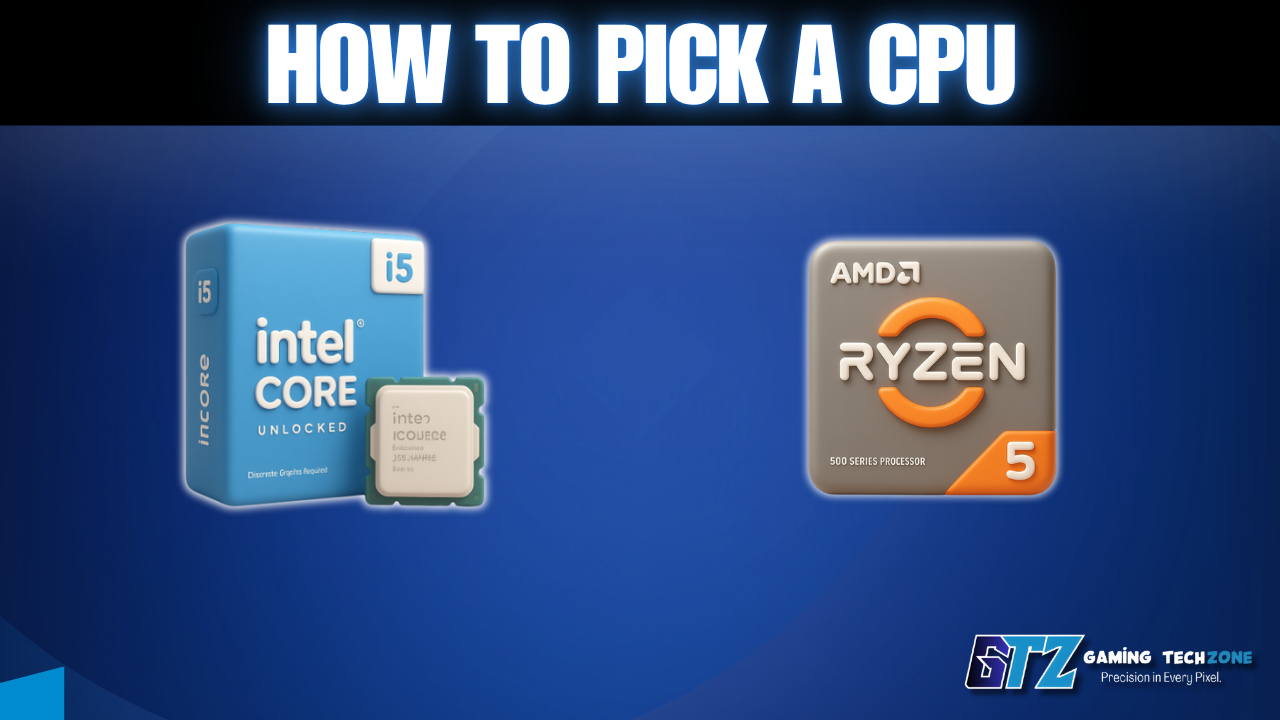
The AMD Ryzen 5 series sits in AMD’s mainstream CPU tier, competing directly with Intel’s Core i5 family. These processors have consistently punched above their weight in both gaming and everyday productivity — and the latest Zen 5-based model takes that even further.
Here’s what you’ll get from this guide: a clear breakdown of each model, real benchmark data, who each chip is best for, and an honest take on where the Ryzen 5 falls short.
Sources & Research Methodology
This guide was created using data from manufacturer specifications, benchmark databases, independent hardware reviews, and real-world user feedback. Specifications, pricing, and recommendations are reviewed periodically and updated when significant market changes occur.
Sources:
- AMD Official Specifications — Official CPU specifications, platform details, architecture information, and compatibility data.
- PassMark CPU Database — Synthetic benchmark scores, comparative rankings, and performance metrics across CPU generations.
- Tom’s Hardware CPU Hierarchy — Gaming benchmarks, CPU rankings, performance analysis, and hardware testing.
- TechPowerUp Reviews — Independent CPU reviews, gaming benchmarks, efficiency testing, and thermal analysis.
- PC Building Communities — Real-world user experiences, long-term ownership feedback, upgrade recommendations, and troubleshooting insights.
- Independent Hardware Reviewers — Cross-referenced benchmark data and testing results from reputable industry reviewers and publications.
Is AMD Ryzen 5 Really Good in 2026?
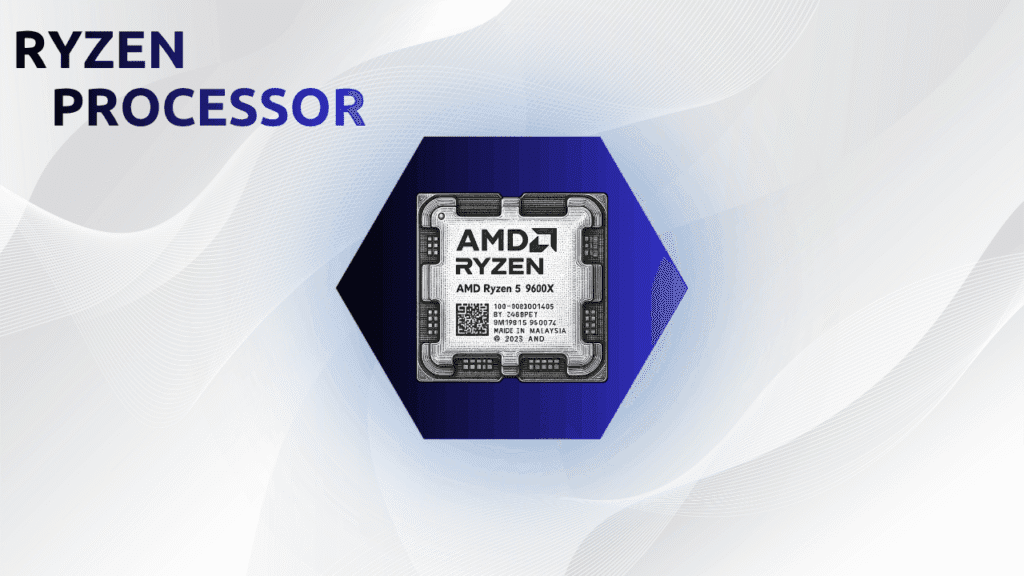
Yes — AMD Ryzen 5 remains one of the best-value CPU families in 2026. The 9600X leads the lineup with strong gaming performance and excellent efficiency, while the 7600X and 5600X still hold up for budget or existing-platform builds.
AMD Ryzen 5 Good for Gaming?
Yes, it’s one of the strongest gaming CPUs under $300 right now. The 9600X matches or beats Intel’s i5-14600K in 1080p and 1440p gaming while drawing significantly less power.
Key strengths and limits:
- Top pick: 9600X — 5.4 GHz boost, no bottlenecks in Cyberpunk 2077, AC Mirage, Horizon Forbidden West
- Competitive shooters: Stable high frame rates and strong 1% lows in CS2, Valorant, Fortnite
- Efficiency edge: Beats i5-14600K in gaming while drawing significantly less power
- Weak spot: No 3D V-Cache — 360Hz CS2-style titles favor the 9800X3D
- Budget route: 5600X still handles 1080p/1440p comfortably with an RTX 4060 or RX 7600
AMD Ryzen 5 Good for Graphic Design?
Yes, it handles everyday 2D design work comfortably. The 6-core, 12-thread design is well-suited to Photoshop, Illustrator, and general layout tools without breaking a sweat.
Where it fits and where it doesn’t:
- Good for: Photoshop, Illustrator, and general 2D layout and design tools
- Multitasking: Handles design apps alongside browsers and reference material with ease
- Efficiency: Low power draw (65W on the 9600X) keeps a design workstation quiet and cool
- Upgrade path: AM5 platform (9600X/7600X) leaves room to add a stronger CPU later
- Consider stepping up if: Your work leans heavily into 3D rendering or GPU-accelerated design
AMD Ryzen 5 Good for Office Work?
Yes — office and general productivity tasks are well within its comfort zone. Even the 6-core design has more than enough headroom for browsing, documents, and video calls without any strain.
Why it fits office use:
- Handles easily: Browsing, documents, spreadsheets, video calls
- Multitasking: Comfortable running several office apps at once
- Overkill factor: More CPU than typical office work demands
- Efficiency bonus: 65W TDP (9600X) means quieter, cooler operation for all-day use
- Budget option: 5600X is plenty for pure office machines, even at AM4 pricing
AMD Ryzen 5 Good for Video Editing?
Only for light editing — it’s not built for heavy timelines or high-res export work. The article is explicit that once content creation becomes a real priority, it’s time to step up to Ryzen 7 or Ryzen 9.
Where it holds up and where it doesn’t:
- Fine for: Casual, short-form video editing
- Struggles with: Simultaneous streaming + gaming + recording
- Core limit: 6 cores show strain under sustained heavy workloads
- Step-up trigger: Long-form or high-resolution footage — move to Ryzen 7 or Ryzen 9
- Direct guidance: Article explicitly says step up if content creation is a priority
AMD Ryzen 5 Good for Photo Editing?
Yes, photo editing is well within its comfort zone. RAW processing and batch edits are lighter on the CPU than video work, so the 6-core design handles them without issue.
Where it fits and where it doesn’t:
- Good for: Lightroom and Photoshop RAW processing, batch edits, and exports
- Multitasking: Runs photo editing alongside browsing or file management smoothly
- Efficiency: Low power draw keeps a photo workstation quiet during long editing sessions
- Upgrade path: AM5 platform gives room to upgrade the CPU later without a new motherboard
- Consider stepping up if: You’re batch-processing huge RAW libraries or mixing in heavy video work
AMD Ryzen 5 Good for Students?
Yes — it’s a practical, future-proofed choice for students who game, study, and multitask on one machine. The AM5 platform buys years of upgrade headroom, so it won’t feel outdated halfway through a degree.
Why it works for student budgets:
- Future-proofing: AM5 platform (9600X/7600X) supported through at least 2027
- Budget-friendly: 5600X reuses existing AM4 boards for a cheap upgrade
- Efficiency: Low power draw keeps electricity and heat down in dorm settings
- Versatility: Handles coursework, browsing, and gaming without separate machines
- Value pick: 9600X offers the best long-term platform investment for the price
AMD Ryzen 5 Good for Streaming?
It’s workable for casual streaming on its own, but the 6-core count becomes a real limiting factor once gaming is added on top. The article specifically flags simultaneous streaming and gaming as a weak point for this chip family.
Where the limits show up:
- Casual streaming: Manageable on its own without recording or heavy overlays
- Breaking point: Streaming + recording + gaming simultaneously strains 6 cores
- Article’s own verdict: Explicitly says “not ideal” for gaming while streaming at once
- Better alternative: Ryzen 7 7700 (8C/16T) for streaming-heavy setups
- Higher-end option: Ryzen 7 9700X if budget allows for extra multitasking headroom
AMD Ryzen 5 Good for Programming?
Yes for most everyday coding, but large compilation jobs are where it shows its limits. Intel’s i5-14600K holds a real edge specifically in heavily-threaded productivity work like big builds.
Strengths and trade-offs:
- Efficiency plus: 65W TDP keeps a dev machine quiet during long coding sessions
- Good for: Web development, scripting, general software work
- Weaker at: Heavily-threaded compilation and large build jobs
- Intel comparison: i5-14600K edges ahead specifically in threaded productivity tasks
- Multitasking: Handles IDE + browser + terminal without issue
Quick Score Table
| Use Case | Score (/10) | Verdict |
|---|---|---|
| Gaming | 9.5/10 | ⭐ Excellent |
| Graphic Design | 8.5/10 | ✅ Very Good |
| Office Work | 10/10 | 🏆 Excellent |
| Video Editing | 6.5/10 | ⚠️ Good for Light Editing Only |
| Photo Editing | 9/10 | ⭐ Excellent |
| Students | 9.5/10 | ⭐ Excellent |
| Streaming | 6/10 | ⚠️ Good for Casual Streaming Only |
| Programming | 8.5/10 | ✅ Very Good |
What Is the AMD Ryzen 5 Lineup in 2026?
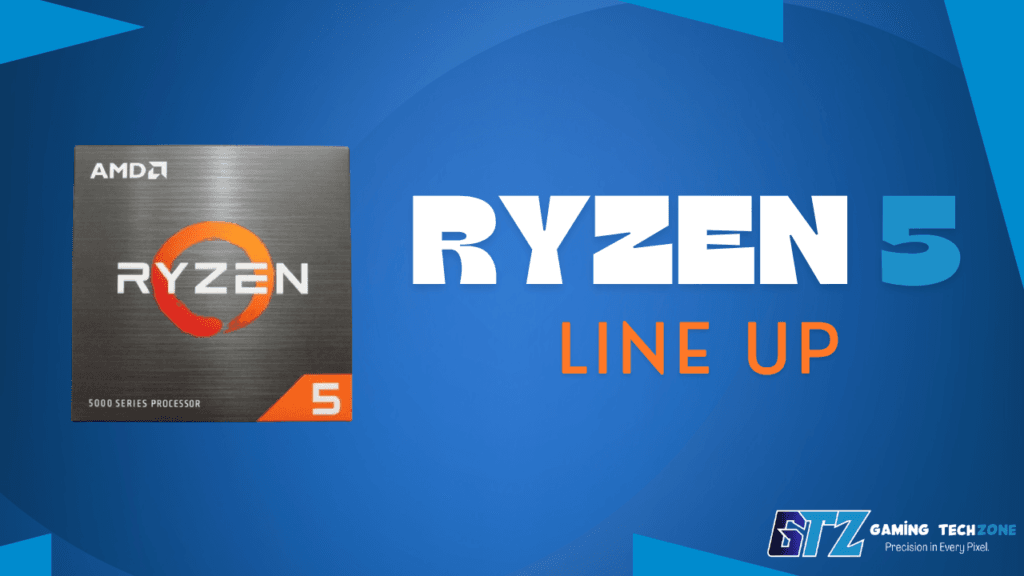
The Ryzen 5 brand covers multiple generations, and not all of them are created equal. As of mid-2026, these are the three models worth your attention:
- Ryzen 5 9600X: Zen 5 architecture, 4 nm process, AM5 platform (newest)
- Ryzen 5 7600X: — Zen 4 architecture, 5 nm process, AM5 platform (one gen older)
- Ryzen 5 5600X: — Zen 3 architecture, AM4 platform (older but still viable)
The AMD has committed to AM5 platform support through at least 2027, which means buying into the 7 series or 9 series gives you future upgrade headroom without swapping your motherboard.
AMD Ryzen 5 9600X Review: The Best Value Mid-Range CPU of 2026
The Ryzen 5 9600X is AMD’s current flagship in the Ryzen 5 tier, and honestly, it’s one of the smartest CPU purchases you can make right now.
We searched extensively online and cross-referenced professional benchmarks from sources like Tom’s Hardware, PassMark, and independent UK/US reviewers — and the 9600X consistently impresses across the board.
Core Specs:
- Architecture: Zen 5 (Granite Ridge)
- Process: 4 nm TSMC
- Cores/Threads: 6 cores / 12 threads
- Boost Clock: 5.4 GHz
- TDP: 65W
- Platform: AM5 (DDR5)
- Price: Typically around ~$180-$250 (as of mid-2026)
Pros:
- Exceptional power efficiency (65W TDP)
- ~17% faster single-threaded vs. previous gen
- Outperforms Intel i5-14600K in gaming
- Supports overclocking via Precision Boost Overdrive (PBO)
- AM5 platform with future upgrade path to Ryzen 9000X3D and beyond
Cons:
- No bundled cooler in the box
- Only 6 cores — shows strain during simultaneous streaming + gaming
- Lacks 3D V-Cache (cache-sensitive titles like CS2 at 360Hz favor the 9800X3D)
- Higher price vs. the 7600X for modest real-world gaming uplift
Best For: Gamers who want a fast, efficient, future-proof mid-range chip for 1080p and 1440p gaming without overspending on their CPU.
Benchmark Results and Real-World Performance:
In gaming tests at 1080p using an AMD Radeon RX 7900 XT, the 9600X delivered smooth gameplay across demanding titles, including Cyberpunk 2077, Assassin’s Creed Mirage, and Horizon Forbidden West — all without any CPU bottleneck. In competitive shooters like CS2, Valorant, and Fortnite, the 5.4 GHz boost clock resulted in high, stable frame rates with excellent 1% lows.
Perhaps the most impressive stat? Across multiple independent benchmark suites, the Ryzen 5 9600X generally matches or exceeds Intel’s Core i5-14600K in gaming while consuming substantially less power.
The 65W TDP is genuinely remarkable. You don’t need an expensive AIO cooler. A solid mid-range air cooler handles it without breaking a sweat, which keeps your build cleaner and quieter.
AMD Ryzen 5 7600X Review: Still Worth It for Budget Builders?
The Ryzen 7600X launched with too-high pricing and harsh criticism at the time. But in 2026, with prices dropping to around $160-$202, it’s actually a solid buy — especially if you already own an AM5 board.
Core Specs:
- Architecture: Zen 4 (Raphael)
- Process: 5nm TSMC
- Cores/Threads: 6 cores / 12 threads
- Boost Clock: 5.3 GHz
- TDP: 105W
- Platform: AM5 (DDR5)
The 9600X beats the 7600X by over 10% in both single-core and multi-core benchmarks — meaningful in productivity workloads, but less dramatic in actual gaming. For pure 1080p gaming, the difference in average FPS is often within a margin most players wouldn’t feel.
The real issue with the 7600X is its 105W TDP — it runs noticeably hotter and louder than the 9600X, and you’ll want a better cooler to maintain stable boost clocks. That extra thermal load adds hidden cost to the build.
Pros:
- Lower purchase price (~$160-$202)
- Strong 1080p and 1440p gaming performance
- Unlocked for overclocking
- AM5 platform (upgrade path intact)
Cons:
- 105W TDP — hot and power-hungry
- Noticeably less efficient than 9600X
- Needs better cooler (adds cost)
- Close in price to 9600X for less performance
Best For: Buyers already on AM5 looking for a CPU upgrade on a tight budget, or anyone picking one up at clearance pricing.
AMD Ryzen 5 5600X Review: Is the Old Guard Still Relevant?
The Ryzen 5600X launched in 2020, and it’s held up remarkably well — still capable for 1080p and even 1440p gaming when paired with a mid-tier GPU like the RTX 4060 or RX 7600. Its limits show in multi-threaded workloads: no PCIe 5.0, no DDR5, and an AM4 platform that’s officially end-of-life. You’re buying into a dead-end socket, even if performance today is still solid.
Pros:
- Proven stability and reliability
- Excellent value at current discounted pricing
- Great for AM4 upgrade without full platform change
- Handles 1080p/1440p gaming comfortably
Cons:
- AM4 is end-of-life — no future upgrade path
- No PCIe 5.0 or DDR5 support
- Will bottleneck higher-end GPUs (RTX 4090, RX 9070 XT)
- Not ideal for streaming + gaming simultaneously
Best For: Existing AM4 users wanting a mid-cycle CPU upgrade without replacing their whole platform.
Comparison Table
| Feature | Ryzen 5 9600X | Ryzen 5 7600X | Ryzen 5 5600X |
|---|---|---|---|
| Architecture | Zen 5 | Zen 4 | Zen 3 |
| Process Node | 4nm | 5nm | 7nm |
| Cores / Threads | 6C / 12T | 6C / 12T | 6C / 12T |
| Boost Clock | 5.4 GHz | 5.3 GHz | 4.6 GHz |
| TDP | 65W | 105W | 65W |
| Platform | AM5 | AM5 | AM4 |
| Memory | DDR5 | DDR5 | DDR4 |
| PCIe | 5 | 5 | 4 |
| ~Street Price (2026) | ~$180-$250 | ~$160-$202 | ~$150 |
| Single-Core Perf. | ⭐ ⭐ ⭐ ⭐ ⭐ | ⭐ ⭐ ⭐ ⭐ | ⭐ ⭐ ⭐ |
| Power Efficiency | ⭐ ⭐ ⭐ ⭐ ⭐ | ⭐ ⭐ ⭐ | ⭐ ⭐ ⭐ ⭐ |
| Future-Proof | ✅ Yes | ✅ Yes | ❌ No |
Ryzen 5 vs Intel Core i5: Which Wins in 2026?
This is the question every mid-range buyer eventually lands on. We’ve looked at this from multiple angles.
In pure 1080p gaming, the Ryzen 5 9600X trades blows with Intel’s Core i5-14600K — and on average, comes out slightly ahead while using significantly less power. Intel’s chips still hold an edge in heavily-threaded productivity tasks like video encoding and large compilation jobs. But for gaming-first builds, AMD’s power efficiency story is a genuine differentiator.
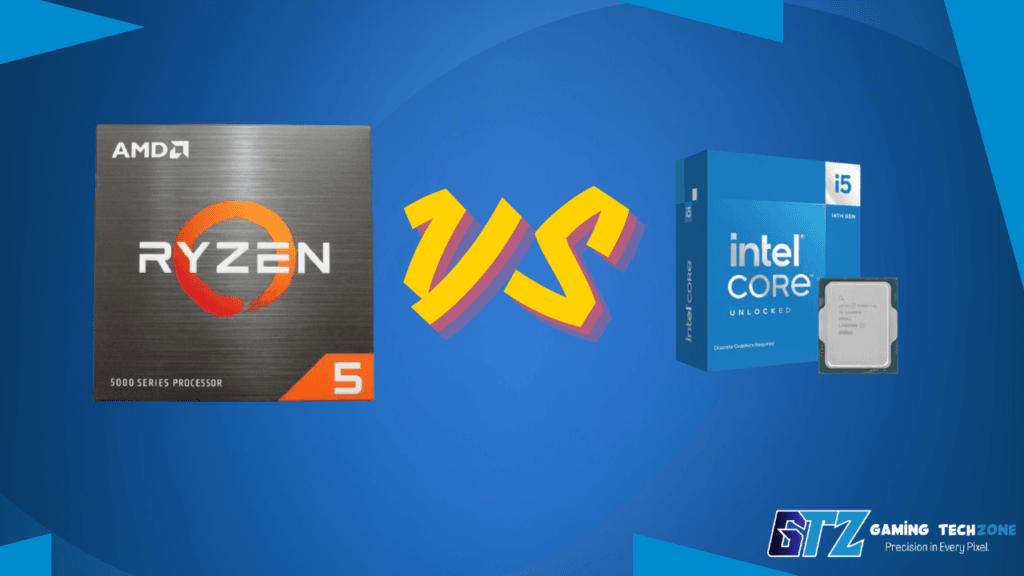
The AMD vs Intel gap in gaming has narrowed to a few frames per second in most titles at the same GPU level. What tips AMD’s favour is the lower power draw, better thermal performance, and a platform (AM5) that still has years of support ahead.
Our take: For gaming builds in 2026, the Ryzen 5 9600X is the stronger overall package vs. similarly priced Intel Core i5 options when factoring in efficiency, thermals, and upgrade headroom.
Who Should Buy the AMD Ryzen 5?
AMD Ryzen 5 9600X if:
- You’re building a new gaming PC from scratch
- You want a fast, efficient chip for 1080p or 1440p gaming
- You want AM5 upgrade headroom for future X3D CPUs
- You run light productivity tasks alongside gaming
Ryzen 5 7600X if:
- You already own an AM5 board and want to upgrade affordably
- You find it significantly discounted below $180
Ryzen 5 5600X if:
- You already own an AM4 motherboard and want a cheap performance bump
- Your GPU is mid-tier (RTX 4060 Ti or below)
- You’re on an extremely tight budget
Skip Ryzen 5 entirely if:
- You stream, record, or do heavy 3D work — move to Ryzen 7 or Ryzen 9
- You play highly cache-sensitive competitive titles at extreme refresh rates — consider Ryzen 7 9800X3D
Alternatives to Ryzen 5 Worth Considering
Not every buyer will land on a Ryzen 5, and that’s perfectly fine. Depending on your workload and budget, a few alternatives deserve serious consideration.
Recommendations:
- Intel Core i5-14600K
- Ryzen 7 7700
- Ryzen 7 9700X
- Intel Core i5-14400F
People Also Ask For
Yes. The AMD Ryzen 5 9600X is one of the best gaming CPUs under $300 in 2026. It delivers strong 1080p and solid 1440p performance, outpacing Intel’s Core i5-14600K in gaming while drawing far less power. For most mainstream gamers, it’s more than enough.
It’s decent for light video editing and casual streaming, but not ideal for heavy workloads. The 6-core design starts to show limits when you’re simultaneously streaming at high bitrate, recording, and gaming. If content creation is a priority, step up to a Ryzen 7 or Ryzen 9.
Only if you’re upgrading an existing AM4 system. It still performs well at 1080p gaming, but you’re buying into a dead-end platform with no future upgrade path. For a fresh build, invest in AM5.
The core difference is core count and target use case. Ryzen 5 chips typically offer 6 cores (12 threads) and are optimized for gaming and general use. Ryzen 7 chips offer 8 cores (16 threads) and are better suited for content creation, streaming, and multitasking-heavy workflows.
The Ryzen 5 9600X and 7600X (AM5 platform) support DDR5 memory — with DDR5-6000 CL30 being the recommended sweet spot for performance. The older Ryzen 5 5600X on AM4 only supports DDR4. If you’re still deciding between an AM4 DDR4 system and a newer AM5 DDR5 build, our DDR4 vs DDR5 for Gaming comparison explains the real-world differences.
Final Words: Is AMD Ryzen 5 Worth It in 2026?
The short answer is yes — AMD Ryzen 5 is still a very good CPU family in 2026, and the Ryzen 5 9600X in particular is the standout pick for mid-range gaming builds. Its combination of Zen 5 efficiency, strong single-core performance, low 65W power draw, and AM5 upgrade path makes it hard to beat at its price point.
The 7600X is worth considering only at clearance prices, and the 5600X remains a legitimate option for AM4 users who aren’t ready to re-platform.
If you’re building new today, start with the Ryzen 5 9600X, pair it with a B650 motherboard and a DDR5-6000 kit, and put the rest of your budget into your GPU — that’s where your gaming performance comes from, anyway.
Last updated: July 2026 | Information verified against current benchmark databases and manufacturer specs.