
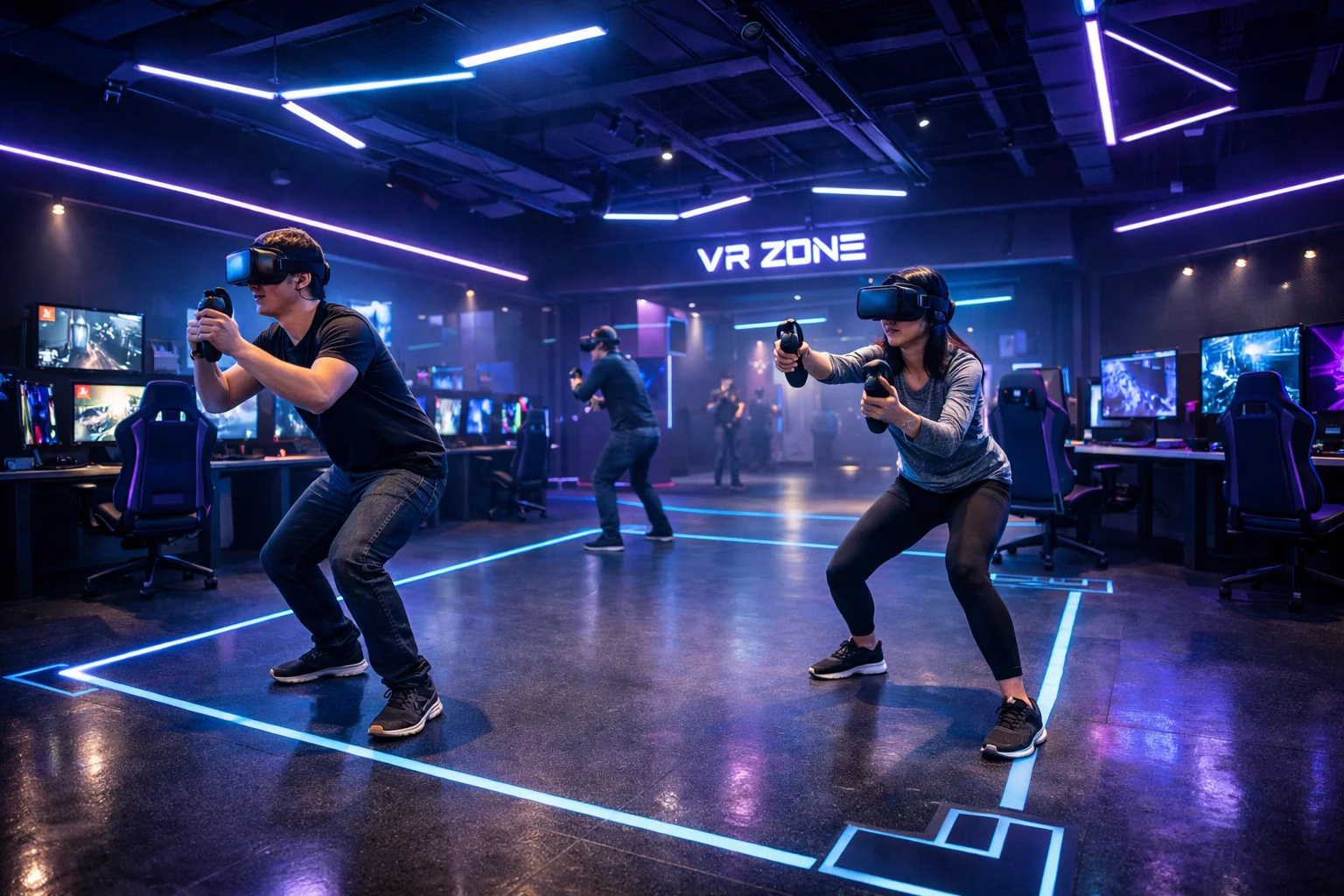
A VR gaming zone is a dedicated space designed for immersive virtual reality gaming experiences using VR headsets, motion controllers, tracking systems, and high-performance PCs.
Whether you’re planning a VR gaming zone business, building a VR gaming room setup at home, or launching a VR arcade gaming zone, this guide covers everything you need, from equipment to layout and cost planning.
Virtual reality has transformed modern gaming zones by adding full-body movement, interactive simulations, and 360-degree environments. Today, many gaming lounges are expanding into VR gaming centers, VR arcade zones, and even multiplayer VR gaming arenas to attract new customers.
What Is a VR Gaming Zone?
A VR gaming zone (also called a VR arcade, VR gaming center, or virtual reality gaming zone) is a specially designed area where players wear VR headsets and physically move within a tracked environment to interact with virtual worlds.
Unlike traditional PC or console gaming:
- Players stand and move
- Games use motion tracking
- 360° immersion replaces flat screens
- Multiplayer VR experiences are possible
VR gaming zones are popular in malls, entertainment hubs, and city centers.
Types of VR Gaming Zones
VR Arcade Gaming Zone: Found in malls or entertainment centers. Offers short session-based gameplay.
Free-Roam VR Gaming Arena: Large open space where multiple players interact in the same virtual world.
VR Gaming Lounge: Smaller setup inside an existing gaming zone.
Home VR Gaming Room Setup: Personal VR play area with limited tracking space.
Essential Equipment for a VR Gaming Zone Setup
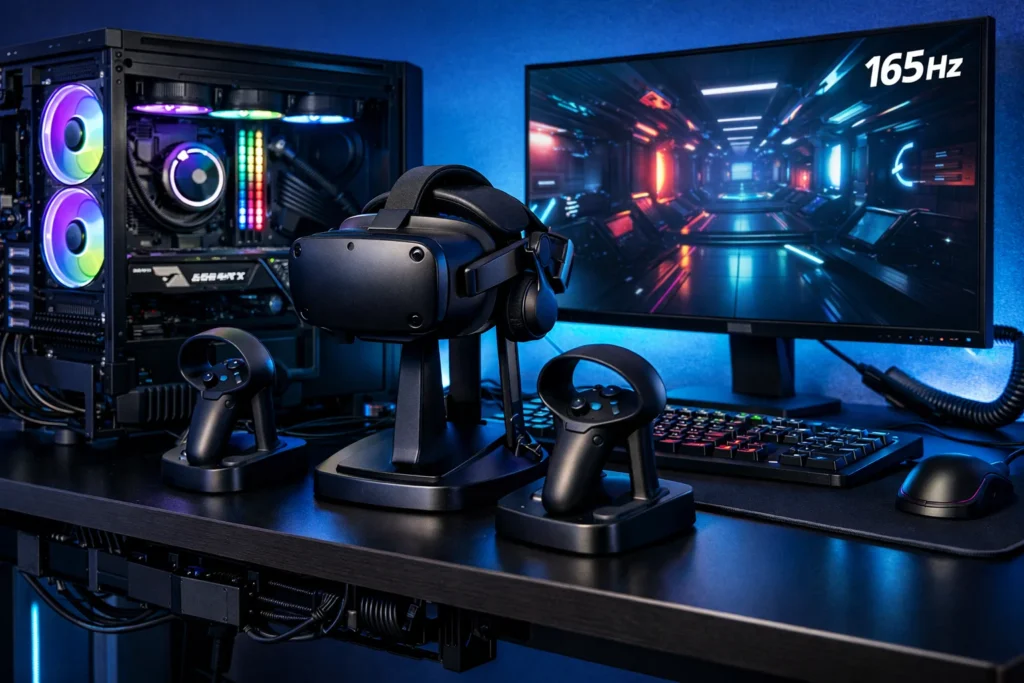
Setting up a successful VR gaming zone requires proper hardware investment.
VR Headsets (Core Equipment)
Popular VR headsets for gaming zones include:
- Meta Quest series
- HTC Vive
- Valve Index
- PlayStation VR (for console-based zones)
Choose headsets that support:
- High refresh rates (90Hz–120Hz)
- Inside-out or external tracking
- Multiplayer compatibility
High-Performance Gaming PCs
Each VR station needs:
- RTX-level GPU
- Minimum 16GB RAM
- SSD storage
- Stable wired internet
VR games demand powerful GPUs to avoid lag or motion sickness.
Tracking & Safety Equipment
A professional VR gaming center must include:
- Motion tracking sensors
- Anti-slip floor mats
- Boundary marking systems
- Cable management system
- CCTV monitoring
Safety is critical in VR environments.
VR Gaming Zone Layout Planning
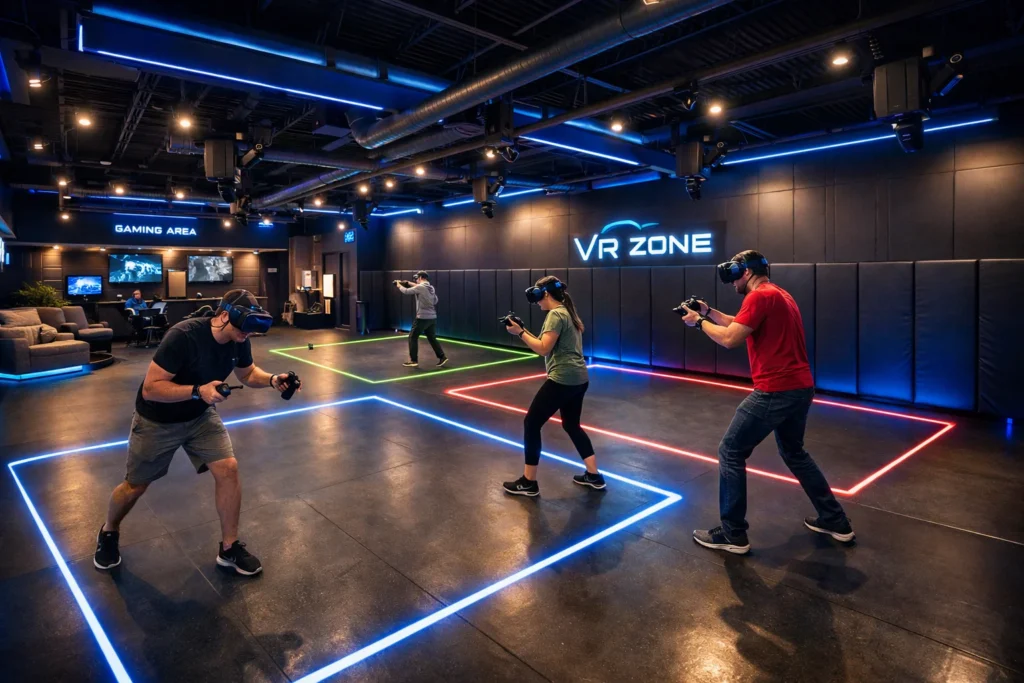
Layout matters more in VR than in traditional gaming setups.
Space Requirements
Minimum recommended space per player:
- 6 ft x 6 ft (basic setup)
- 10 ft x 10 ft (premium experience)
Free-roam VR zones may require 500–2000 sq ft.
Ventilation & Cooling
VR sessions are physically intense. Ensure:
- Proper AC
- Air circulation
- Sweat-resistant equipment
VR Gaming Zone Setup Cost (Estimated)
The cost depends on scale and location.
Small VR Gaming Room Setup (2 Stations)
- VR Headsets: $800 – $1500 each
- Gaming PC: $1200 – $2000 each
- Furniture & Setup: $500 – $1500
- Estimated total: $5,000 – $8,000
Medium VR Gaming Center (6–8 Stations)
- Estimated total: $25,000 – $50,000
Large Free-Roam VR Arena
- Estimated investment: $60,000 – $150,000+
Whether you are building a gaming zone with VR or without VR, costs vary depending on equipment quality and location rent.
Popular Games in VR Gaming Zones
VR arcades usually offer:
- Multiplayer shooting games
- VR racing simulators
- Zombie survival VR
- VR escape room experiences
- VR sports simulations
- Adventure and exploration games
Game licensing is important for commercial VR use.
How to Start a VR Gaming Zone Business
If you’re planning a VR gaming zone business, follow these steps:
- Market research (location demand)
- Choose target audience (kids, adults, esports, families)
- Decide format (arcade vs free-roam)
- Secure proper licenses
- Hire trained staff
- Promote via social media and local ads
Community events and tournament nights help increase repeat customers.
VR Gaming Zone Business Model
Revenue streams include:
- Hourly VR sessions
- Group booking packages
- Birthday party packages
- Corporate team-building events
- Membership plans
- Add-on snacks and merchandise
Many successful VR gaming centers combine traditional gaming zones with VR sections to diversify income.
Common Mistakes to Avoid
These are some mistakes you should avoid.
- Underpowered PCs causing lag
- Overcrowded VR play areas
- Poor hygiene management
- Lack of trained staff
- Ignoring maintenance
VR equipment requires regular calibration and cleaning.
Future of VR Gaming Zones
The future includes:
- Wireless VR setups
- Cloud VR gaming
- Haptic feedback suits
- Multiplayer large-scale VR arenas
- AI-integrated virtual environments
As VR technology becomes more affordable, VR gaming zones will continue expanding globally.
Final Thoughts
A VR gaming zone setup is a powerful way to modernize any gaming center or start a profitable entertainment business. With the right hardware, safety measures, and marketing strategy, a VR gaming zone can deliver immersive experiences that traditional gaming cannot match.
Whether you’re building a small VR gaming room or launching a full-scale VR arcade gaming zone, planning, equipment quality, and customer experience are the keys to long-term success.
🎮 Level Up Your Gaming Knowledge with GamingTechZone.com
Discover expert guides on gaming zones, esports setups, cloud gaming, gaming hardware reviews, and business insights. Whether you’re building a cyber hub gaming zone or upgrading your gaming setup, we’ve got you covered.
Visit GamingTechZone.com →FAQs
Costs range from $5,000 for a small setup to over $100,000 for a large free-roam VR arena.
Yes, especially in malls and entertainment hubs with strong foot traffic.
At least 6×6 feet per player, larger for premium experiences.
Commercial VR centers often use Meta Quest, HTC Vive, or Valve Index depending on budget and use case.
