
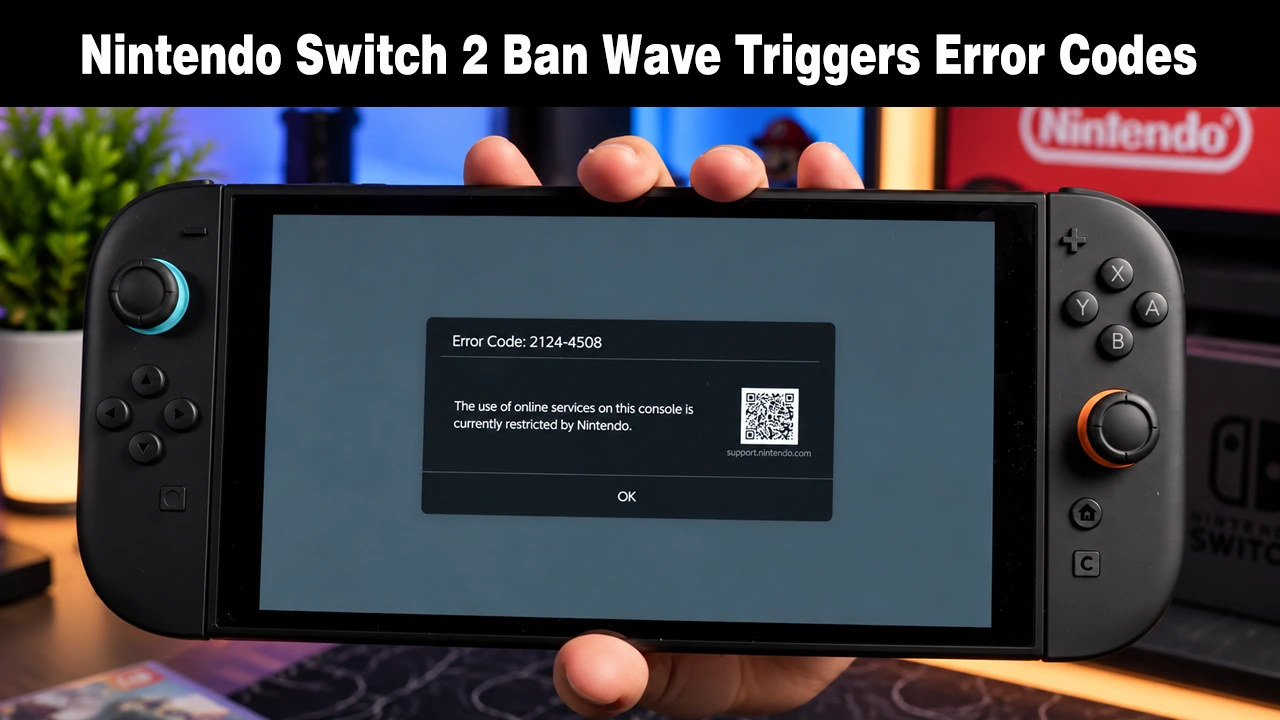
- Nintendo Switch 2 owners reported bans between September 5–7, 2026, tied to error codes 2124-4508 and 2181-4008
- Bans blocked access to Nintendo Switch Online, the eShop, and Game-Key Card installations
- Nintendo support later attributed the wave to a server error, not confirmed piracy
- Most affected consoles regained access after a reboot and reconnect; some required direct support intervention
Between September 5 and 7, 2026, a wave of Nintendo Switch 2 consoles locked owners out of Nintendo Switch Online and the eShop, showing error codes 2124-4508 and 2181-4008. Many affected users said the games they play were never related to piracy.
Nintendo later blamed a server-side error rather than a piracy crackdown, and most bans were lifted after users rebooted and reconnected their consoles. The incident shows a reality that when you buy modern console hardware, you are effectively leasing permission to use it from a remote server you do not control.
Error Codes 2124-4508 and 2181-4008 Reveal a Single Point of Failure
As Beebom notes, both error codes trace back to the same enforcement layer: Nintendo’s server-side check on whether a console’s online privileges are valid.
When that check misfires, the console doesn’t just lose multiplayer or eShop browsing; it can block installation of Game-Key Cards, the download-license physical cartridges some Switch 2 titles now ship with.
When that check fails, the console can lose access to multiplayer and the eShop. It can even block Game Key Card installations, which some Switch 2 games like Minecraft now use to download the full game.
That’s a meaningfully different failure mode than earlier consoles’ offline-first design, and it’s part of why the shift toward Game Key Card releases has drawn scrutiny since Switch 2 launched.
User Reports Show No Regional Consistency
Affected owners posted from multiple regions, including a Japanese buyer who purchased a console and a copy of Zelda: Breath of the Wild from retailer Yodobashi Camera and was banned two days later, as Notebook Check reports.
Separately, an Indonesian buyer reported that their console was flagged despite using new, unopened cartridges.
Some community members speculated that connecting through shared public networks, such as a local cyber gaming zone or public esports arena, might have triggered IP-based security flags.
However, the spread across different regions suggests the problem came from Nintendo’s backend rather than a specific regional storefront or resale channel.
Nintendo’s Enforcement Has Tightened Before Without Warning
This isn’t the first time Switch 2 owners have been banned enforcement-side without clear cause.
In June 2025, Nintendo blocked consoles running firmware tied to the MIG Switch flash cart, a tool built for loading unauthorized game backups.
That ban targeted a known workaround; this week’s wave did not, underscoring how enforcement systems built to catch piracy can misfire against legitimate buyers with no recourse beyond a reboot or a support ticket.
