
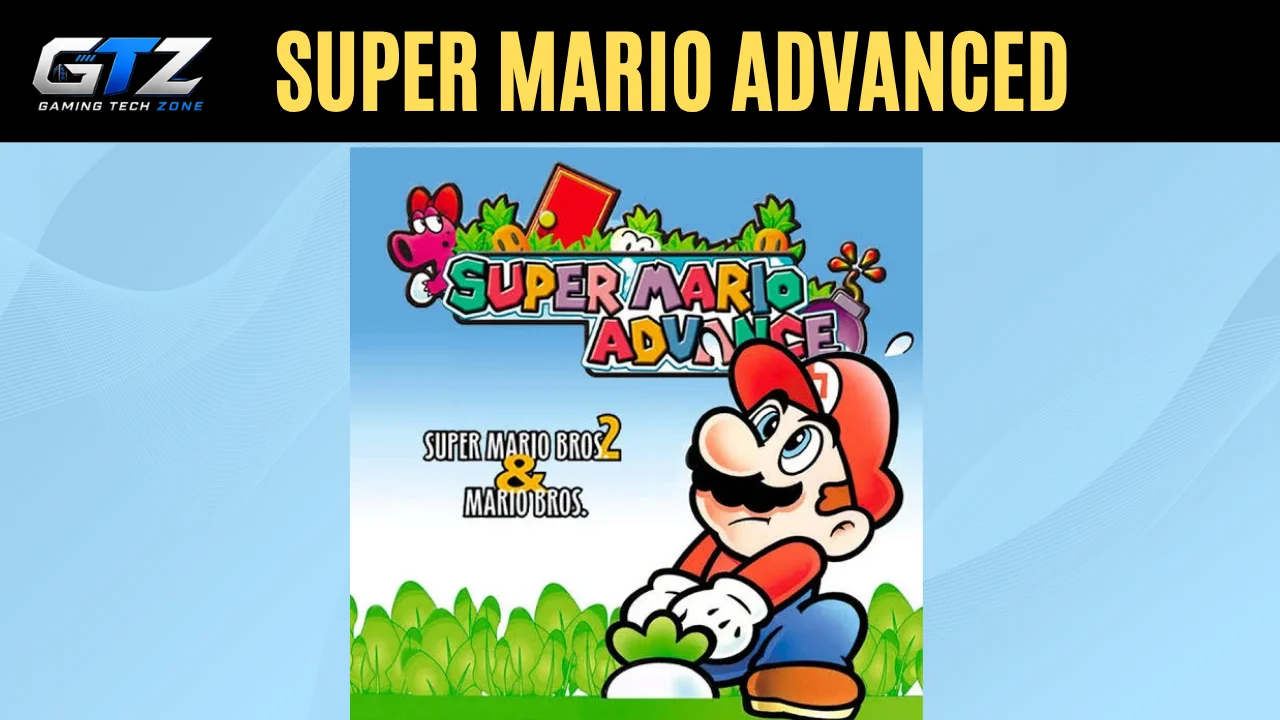
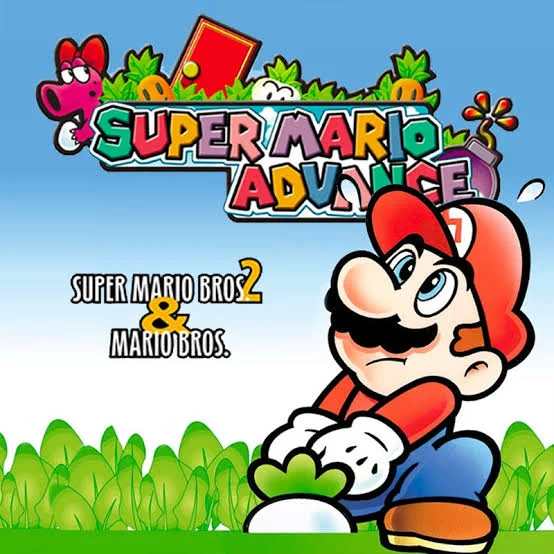
Super Mario Advance brings a classic Mario adventure to the Game Boy Advance with updated graphics, improved audio, and a few extra features.
Released in 2001, the game includes an enhanced version of Super Mario Bros. 2 and a remake of the original Mario Bros. arcade game. I like how it offers a different style of platforming from the usual Mario games, with characters who have different abilities and items that you can throw at enemies.
However, some parts feel dated today. Let’s look at its story, gameplay, visuals, and overall experience. In this article, I will be reviewing the main Super Mario Bros. 2 adventure included in Super Mario Advance, covering its story, gameplay, visuals, and overall experience.
Super Mario Advance: Quick Review
| Game Detail | Information |
|---|---|
| Developer | Nintendo R&D2 |
| Publisher | Nintendo |
| Release Date (North America) | June 11, 2001 |
| Original Platform | Game Boy Advance |
| Genre | 2D platformer |
| Game Modes | Single-player and multiplayer |
| Main Adventure | Enhanced version of Super Mario Bros. 2 |
| Additional Game | Mario Bros. |
Super Mario Advance is a two-game package. Its main attraction is the enhanced version of Super Mario Bros. 2, while the included Mario Bros. offers a simpler arcade-style experience.
When Was Super Mario Advance Released?
Super Mario Advance was released in North America on June 11, 2001, for the Game Boy Advance. It arrived in Japan on March 21, 2001, and reached Europe on June 22, 2001. The game was one of the launch titles for Nintendo’s handheld console.
Instead of introducing a completely new Mario adventure, Nintendo chose to remake Super Mario Bros. 2 for the system.
The result kept the original game’s unusual mechanics while improving its presentation and adding a few new features. The package also included Mario Bros., giving players a second classic game to enjoy.
My Detailed Super Mario Advance Review:
Now that I have discussed the basics of Super Mario Advance, it’s time to review it in detail. Below is my detailed review of its story, gameplay, and other important factors:
The Story
- My rating: 7/10
The story takes Mario and his companions into Subcon, a mysterious dream world controlled by Wart. Mario, Luigi, Princess Toadstool, and Toad must travel through this land, defeat its enemies, and stop Wart from keeping it under his control.
The plot is simple, as you would expect from a platformer of this era. It mainly gives players a reason to move through the levels and defeat the bosses. There are no long cutscenes or complicated character stories, so the adventure gets moving quickly.
What I find interesting is the game’s unusual setting. Instead of following the familiar Mushroom Kingdom formula, the adventure takes place in a dream world filled with strange enemies, unusual objects, and hidden areas. This helps the game stand apart from other Mario platformers.
The story is not the main reason to play Super Mario Advance. However, it does enough to support the gameplay without slowing the adventure down.
Gameplay Review
- My rating: 8.5/10
Super Mario Advance stands out with its different approach to 2D platforming. Instead of jumping on most enemies, you pick up objects, pull vegetables from the ground, and throw them to clear your path.
You can choose from four characters, each with unique abilities:
- Mario offers balanced movement.
- Luigi jumps higher.
- Peach can float briefly.
- Toad picks up objects quickly.
The levels feature platforming challenges, hidden areas, and boss fights that require you to use items creatively.
The included Mario Bros. arcade game adds extra value, with simple action and multiplayer support through compatible Game Boy Advance systems and link cables. However, the movement can feel less precise than in newer platformers.
Graphics and Visuals
- My rating: 8/10
For a Game Boy Advance title from 2001, Super Mario Advance looks good. The game uses bright colors, detailed character sprites, and recognizable environments to bring the original adventure to the handheld. The characters and several enemies also have larger or updated sprites compared with earlier versions.
I particularly like the colorful backgrounds and the variety of settings across the levels. They give the game a distinct look without making the screen difficult to understand.
The updated presentation also helps the included Mario Bros. feel more suitable for the GBA.
However, the visual improvements are not enough to make the game look completely new. Much of the underlying design comes from the older Super Mario Bros. 2, and some sections use vertical scrolling that can make it harder to see what lies above or below you.
These are relatively minor issues, though. The visuals still hold up well for a retro game, especially if you enjoy classic 2D platformers.
Sound and Music
- My rating: 7.5/10
The music is one of the game’s strongest features. It retains the memorable tunes from Super Mario Bros. 2, giving familiar levels the same playful atmosphere. The sound effects also fit the action, from picking up objects to defeating enemies.
The main addition is the voice clips for Mario, Luigi, Peach, and Toad. These short recordings give the characters more personality, but they can become repetitive when you hear them repeatedly during a long play session.
Some players may enjoy the extra character, while others may find the voices annoying.
The Game Boy Advance’s audio hardware also has its limits, so the sound does not have the depth you would expect from modern games. Even so, the soundtrack remains enjoyable, and the audio changes help distinguish this version from earlier releases.
Difficulty and Replayability
- My rating: 7.5/10
Super Mario Advance starts at a manageable pace but becomes more challenging as you progress. Some levels require careful jumps, while others test how well you use items and each character’s abilities.
Boss fights also ask you to learn patterns and time your attacks instead of rushing forward.
The choice of characters gives you a reason to experiment. Luigi’s higher jumps and Peach’s floating ability can help in certain situations, while Toad’s quick item handling is useful when you need to clear enemies. Trying different characters can change how you approach a level.
The game also includes collectibles and extra challenges that give you reasons to explore. The second game, Mario Bros., adds another way to play, especially if you have friends and compatible hardware for multiplayer.
However, the overall package does not offer the same long-term variety as a larger modern platformer. Once you finish the main adventure and spend some time with the arcade game, there may not be much left to do unless you enjoy replaying levels or chasing collectibles.
Performance and Controls
- My rating: 7.5/10
Super Mario Advance runs very smoothly on the original Game Boy Advance. Its side-scrolling gameplay works very well. The game runs pretty much smoothly throughout most of the adventure without putting too much pressure on the system.
The controls are easy to learn. You can move, jump, pick up objects, and throw them without memorizing complicated commands.
However, the movement can feel floaty when making precise jumps, and vertical scrolling sometimes makes upcoming platforms harder to judge. These issues may stand out if you’re used to the tighter controls of modern Mario games.
Overall, the controls suit the game’s design and rarely get in the way of the fun. They may take a little time to get used to, but they work well enough for most levels.
What I Liked
- Different character abilities make the gameplay more interesting.
- Picking up vegetables and throwing them at enemies adds variety to the platforming.
- The colorful visuals look good on the Game Boy Advance.
- The familiar music fits the game’s classic Mario style.
- The included Mario Bros. arcade game adds another way to play, including multiplayer.
What I Disliked
- The characters’ voice clips become repetitive after a while.
- Vertical scrolling sometimes makes jumps and upcoming platforms harder to judge.
- It offers limited replay value after completing the main adventure.
- The movement and controls feel dated compared with newer platformers.
How to Play Super Mario Advance Today?
There are different gaming platforms on which you can play Super Mario Advance today. Here are some of your main options:
1. Play on the Original Game Boy Advance
You can play the game using an original Game Boy Advance and a physical cartridge. Used copies may be available through retro game stores and second-hand marketplaces. Check the cartridge’s condition and authenticity before buying.
2. Play on Nintendo Switch
Super Mario Advance is available through the Game Boy Advance library included with Nintendo Switch Online + Expansion Pack. You need an active subscription to access the game. This is a convenient option if you already own a compatible Switch system.
3. Play Through Emulation on a PC
You can also play the game on a gaming PC using a Game Boy Advance emulator. Depending on the emulator, you can use a keyboard or connect a compatible controller. Make sure you follow local copyright laws and use legally obtained game files.
Before You Play the Game
Keep in mind that the graphics and sound experience in Super Mario Advance can vary depending on the platform you choose to play it on.
The original Game Boy Advance has a small screen and built-in speakers, while playing on a Nintendo Switch or PC may offer a different display and audio experience.
Your emulator settings, screen size, and audio output can also affect how the game looks and sounds. Keep these differences in mind when comparing the original release with modern ways to play it.
Final Verdict
I think Super Mario Advance is a good choice for fans of classic 2D platformers. Its unique character abilities, item-based combat, and varied levels make the gameplay enjoyable. The updated visuals and included Mario Bros. arcade game are also nice additions.
However, dated movement, repetitive voice clips, and limited replay value hold it back. If you missed the original or want a different Mario experience, I recommend giving it a try.
People Also Ask
Yes, Super Mario Advance is worth playing if you enjoy classic 2D platformers and want to experience a different style of Mario gameplay. However, some controls and features may feel dated compared with newer games.
Not exactly. Super Mario Advance contains an enhanced version of Super Mario Bros. 2 along with a remake of the original Mario Bros. arcade game. It also adds updated visuals, voice clips, and other small changes.
The main adventure has four playable characters: Mario, Luigi, Princess Toadstool, and Toad. Each has different strengths, including differences in jumping, floating, and picking up objects.
Yes. It is available through the Game Boy Advance library included with Nintendo Switch Online + Expansion Pack. An active subscription is required.
The time depends on your experience and how much optional content you explore. Players who focus on completing the main adventure can finish it in several hours, while collecting extras or replaying levels can extend the experience.
