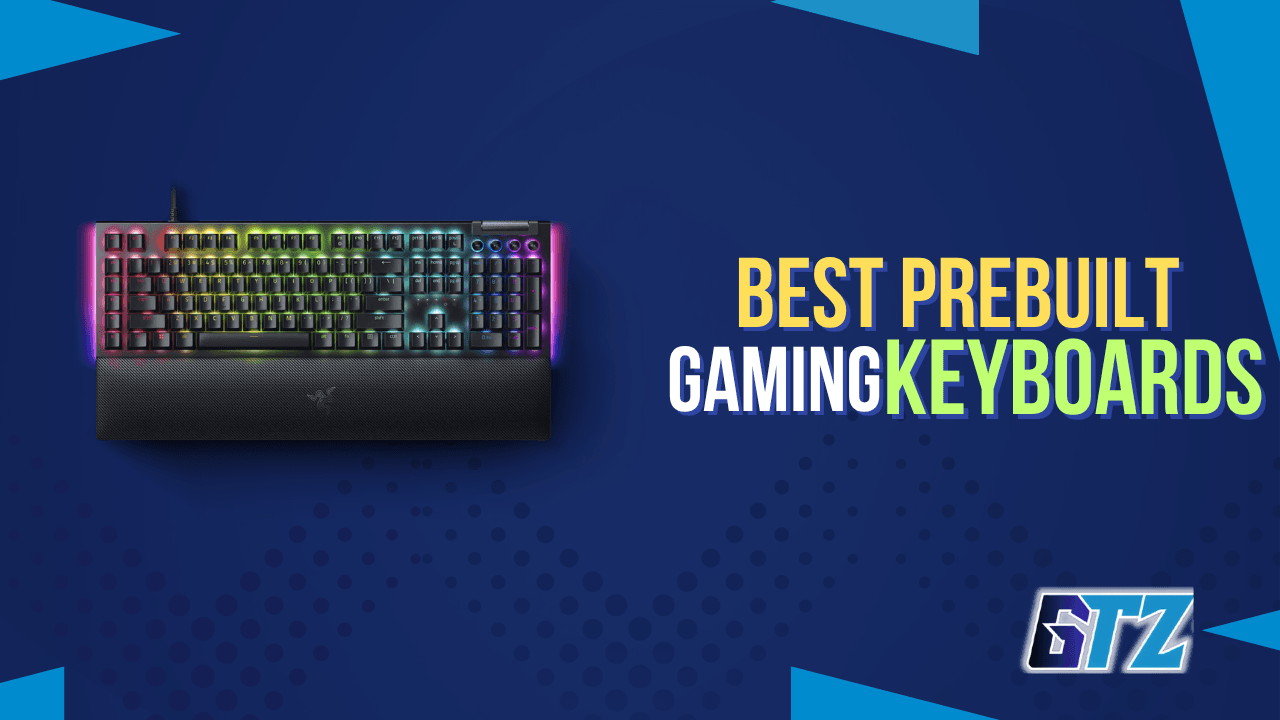
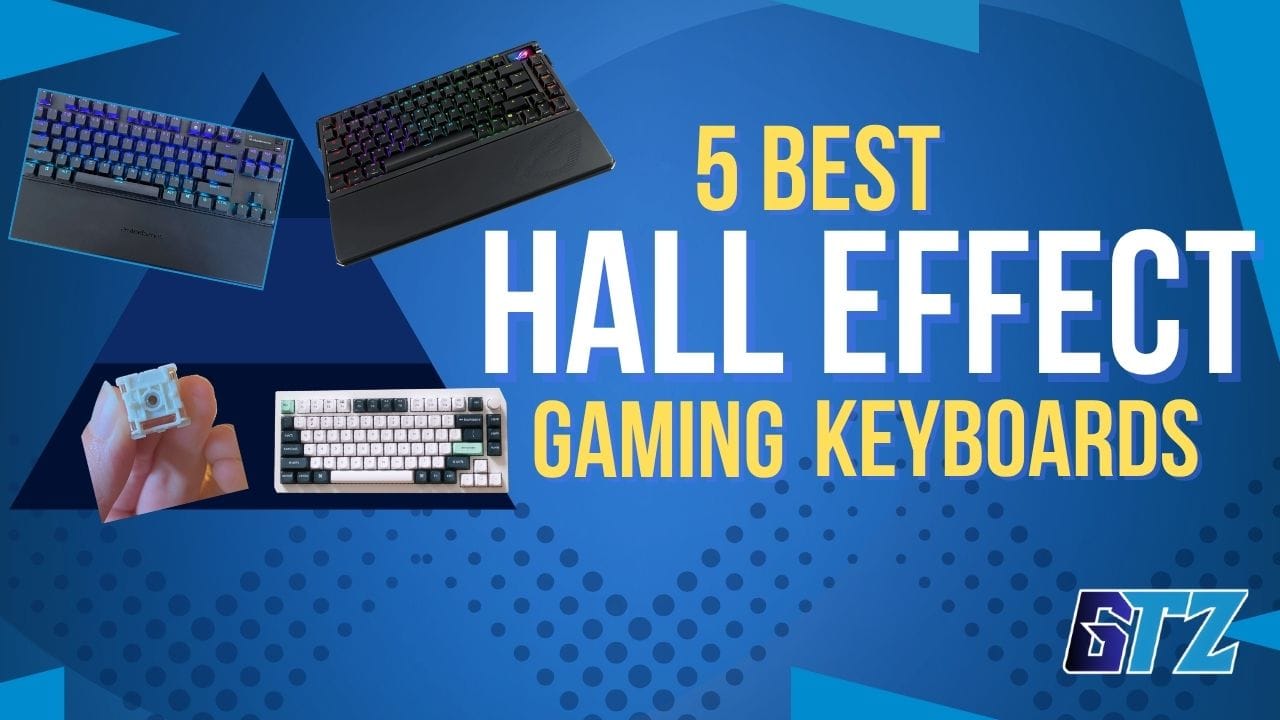
If you’re still gaming on a traditional mechanical keyboard in 2026, you’re leaving real performance on the table and you might not even know it. The best gaming Hall-Effect keyboards work completely differently from mechanical ones.
Instead of metal contacts slapping together, a magnet moves past a sensor that reads its exact position. No debounce delay. No “actuation point” you can’t change. Just raw, analog, 0.1 mm resolution input that responds the instant your finger moves.
The result? Faster counter-strafing in CS2. More precise directional changes in Valorant. A genuine, measurable competitive edge that pros and casual players alike are catching onto.
This guide cuts through the noise. We researched every major option in 2026, from premium flagship boards to smart budget buys, and broke down exactly which keyboard is worth your money and why.
What Makes a Hall Effect Keyboard Better for Gaming?
Before jumping into picks, it helps to understand what you’re actually buying.
Hall effect switches use a magnet attached to the switch stem and a Hall effect sensor on the PCB. As you press the key, the sensor reads the precise magnetic field strength at every fraction of a millimeter. This unlocks features you simply cannot replicate on mechanical switches:
- Rapid Trigger: The key resets the instant you lift your finger, no waiting for a physical reset point. This allows near-instant re-actuation, which is game-changing for FPS counter-strafing.
- Adjustable Actuation: Set your actuation point from 0.1 mm to 4.0 mm per key. Set movement keys ultra-light (0.2 mm) and ability keys heavier to prevent misfires.
- SOCD Handling: Simultaneous Opposite Cardinal Direction input can be managed cleanly, something mechanical keyboards can’t handle at a hardware level.
- No Contact Wear: Since nothing physically touches, the switch lifespan is measured in hundreds of millions of keystrokes, not tens of millions.
One honest downside worth knowing upfront: Almost all Hall Effect switches are linear. If you love the tactile bump of a clicky or tactile mechanical switch, most HE boards won’t scratch that itch. A small number of premium models are working on this, but it remains largely a linear-switch ecosystem.
How to Choose the Best Hall Effect Keyboard for Gaming?
1. Does Wired or Wireless Really Matters?
For the absolute best performance, wired is still superior. While some boards offer wireless modes, latency is always lowest over a USB-C cable. For professional competitive play, go wired.
For casual setups or streaming desks, wireless options like the Keychron K3 HE or ROG Azoth 96 HE are now genuinely viable.
2. Should We Prioritize Polling Rates?
In everyday gaming, 1,000 Hz and 8,000 Hz polling feel nearly identical. The gap shows up in extremely fast directional input scenarios, counter-strafing at high skill levels, rapid jitter-aim techniques, and latency-sensitive esports titles.
If you’re competing seriously, prioritize 8,000 Hz. If you’re gaming casually, 1,000 Hz won’t be your bottleneck.
3. Software Quality Matters More Than You Think
Hardware specs mean nothing if you can’t configure your rapid trigger settings reliably. Wooting remains the gold standard for software (web-based, easy to use), followed closely by Keychron and NuPhy. Avoid generic no-name brands if you want hassle-free rapid trigger setup.
4. Which Layout is Best?
- 75%: Best balance of function row, arrow keys, and desk space (Wooting 80HE, NuPhy Air75 HE)
- TKL: Classic competitive layout, widely available (Apex Pro TKL Gen 3)
- 96%: Numpad-adjacent without full-size bulk (ROG Azoth 96 HE)
- 60–65%: Maximum space, best for low mouse DPI setups
The Best Hall Effect Gaming Keyboards in 2026
These are 5 of the best options for you to choose the best Hall-Effect gaming keyboards.
1. Wooting 80HE—Best Overall Hall Effect Gaming Keyboard
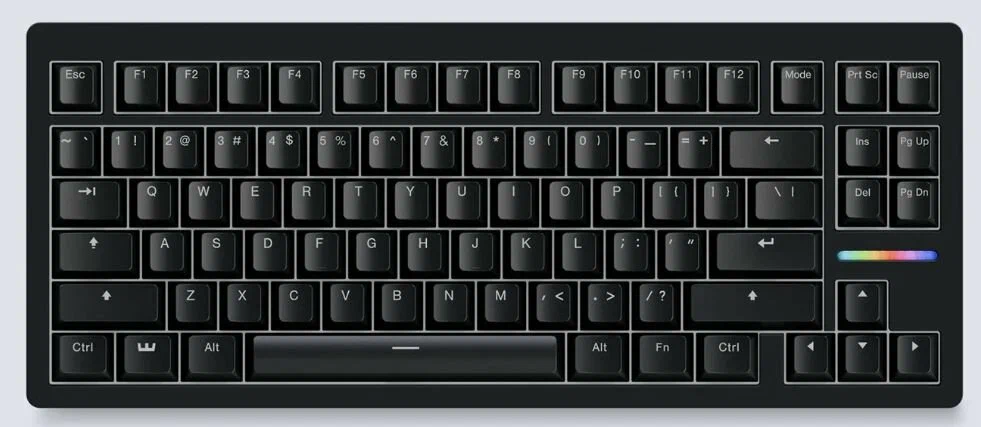
The Wooting 80HE is the keyboard that the entire hall effect market measures itself against. PC Gamer’s top pick, it stands head and shoulders above the rest not just for raw speed but also for its ease of use and its excellent companion application, Wootility.
Why it wins: Wootility is genuinely the best keyboard software in the business. It’s web-based, fast, and doesn’t require a 400MB background service running at startup.
Regular firmware updates from Wooting add real features, not just bug fixes, and Rappy Snappy (their SOCD solution) comes built in, helping with direction changes without triggering game bans.
The 80HE improved on its predecessor with better acoustics, dedicated arrow keys, and a layout that works for gaming and serious typing alike. Polling is 8,000 Hz. Rapid trigger goes down to 0.1 mm. Actuation range is 0.1 mm–4.0 mm.
Honest drawbacks: Availability can be inconsistent since Wooting operates in batch releases. If you miss a drop, you’re waiting. The 80HE is also wired only. There is no wireless option that exists.
| PROS | CONS |
|---|---|
| Industry-leading software (Wootility) | Wired only |
| 8,000Hz polling rate | Batch availability model — can sell out |
| Refined acoustics over Gen 1 | Premium price (~$175+) |
| SOCD support built-in | — |
Best for: Competitive FPS players who want the most polished hall effect experience available.
2. ASUS ROG Azoth 96 HE—Best Premium Hall Effect Keyboard
If budget isn’t your concern, the ROG Azoth 96 HE is technically the most fully loaded hall effect keyboard you can buy right now. GamesRadar named it the best hall effect keyboard, topping rankings for typing feel, features, and overall quality of life.
What sets it apart from the Wooting is wireless. The Azoth 96 HE is the first mainstream keyboard to deliver 8,000 Hz polling wirelessly via SpeedNova technology, something Wooting and most competitors still can’t claim. It also pairs this with HFX V2 switches offering 0.01 mm adjustment precision, a color OLED touchscreen, a three-way control knob, and six-layer sound dampening.
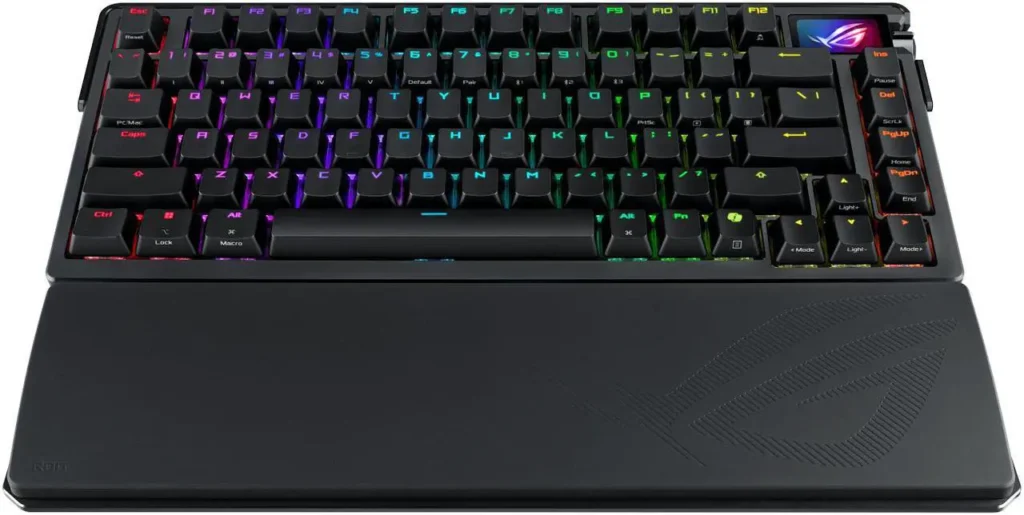
The honest caveat: $359.99 is a lot of money, and ROG Armoury Crate software is notoriously heavy and complex. If you’re sensitive about bloatware, factor that in.
| PROS | CONS |
|---|---|
| 8,000 Hz wireless polling (industry first) | $359.99 price tag |
| Premium build, metal case, braided cable, pre-lubed stabs | ROG Armoury Crate is heavy software |
| OLED screen, media controls, knob | 96% layout may not suit minimalists |
| Best acoustic dampening in the category | — |
Best for: Gamers who want a wireless hall effect keyboard that competes with wired options at a performance level.
3. SteelSeries Apex Pro TKL Gen 3—Best for Retail Availability
Not everyone wants to wait on import stock or batch drops. The Apex Pro TKL Gen 3 is one of the most popular Hall effect keyboards for competitive gaming in the world right now. Major retail stores globally carry it, which matters when you want to try before you buy.
OmniPoint 3.0 magnetic switches deliver per-key adjustable actuation and rapid trigger. Multiple layers of acoustic foam give it a noticeably better sound profile than most boards in this price range. The programmable OLED display is a genuine bonus, not just a gimmick.
The honest limitation: The Apex Pro Gen 3 is capped at 1,000 Hz polling. In 2026, when budget Chinese boards at $50 offer 8,000 Hz, it’s a real gap that SteelSeries hasn’t addressed.
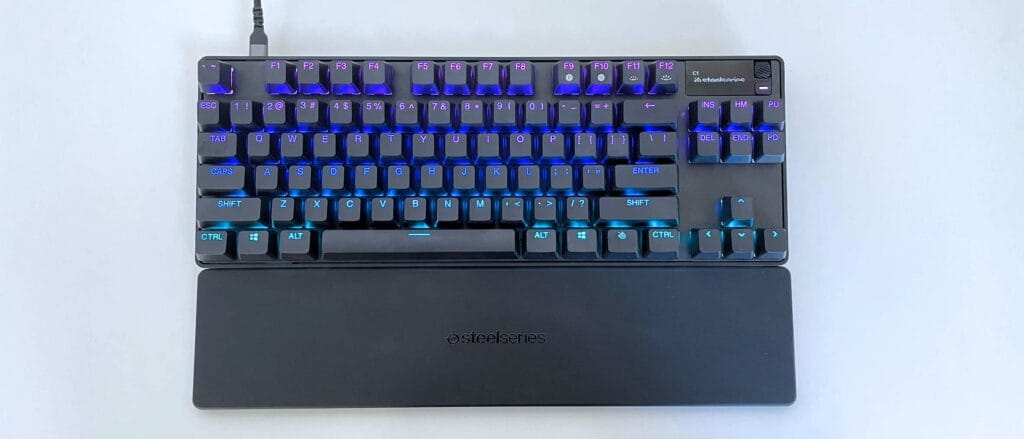
If you’re chasing peak competitive performance numbers, look elsewhere. If you want a reliable, globally supported gaming keyboard from a trusted brand, this delivers.
| PROS | CONS |
|---|---|
| Walk-in-store availability worldwide | 1,000Hz polling ceiling (not 8,000Hz) |
| Excellent build quality and acoustics | No hot-swap support |
| OLED display with real utility | SteelSeries GG software can feel heavy |
| Strong esports pedigree | — |
Best for: Gamers who want an established brand, easy software setup, and retail support.
4. Keychron K3 HE—Best Wireless Hall Effect Keyboard Under $150
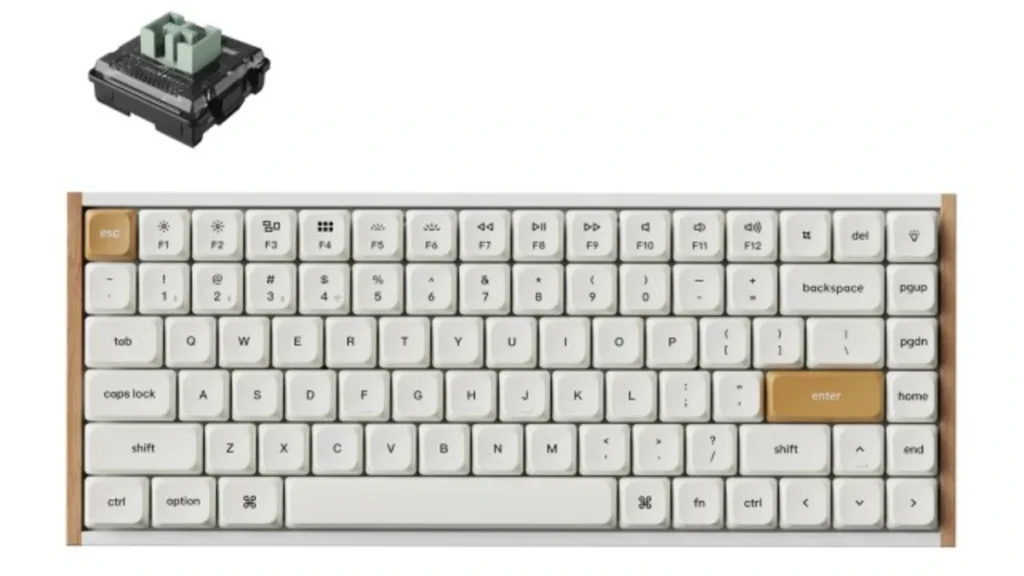
The Keychron K3 HE launched in February 2026 with 2.4 GHz wireless, Bluetooth, and USB-C wired support, a genuine differentiator in a category where wireless Hall Effect is almost unheard of.
It runs Keychron’s Ultra-Fast Lime Low Profile switches with Hall Effect sensing, supports rapid trigger and adjustable actuation, and works with both QMK and Keychron’s web configurator. The low-profile design keeps desktop height minimal and helps with longer sessions.
If you want Hall Effect performance without a wire tethering you, the K3 HE is currently the most accessible option for that. The main tradeoff is low-profile switches. The travel distance is shallower than standard switches, which some gamers find tiring over long sessions.
| PROS | CONS |
|---|---|
| True triple-mode wireless (2.4 GHz, BT, USB-C) | Low-profile may not suit all typists |
| QMK/VIA-compatible max customization | Slightly shorter key travel (not ideal for some FPS styles) |
| Affordable for a wireless HE board | Not as feature-rich as Wooting or ROG |
| Low profile for ergonomic setup | — |
Best for: Wireless enthusiasts or anyone wanting a clean, wire-free Hall Effect setup.
5. DrunkDeer A75 Pro—Best Budget Hall Effect Gaming Keyboard
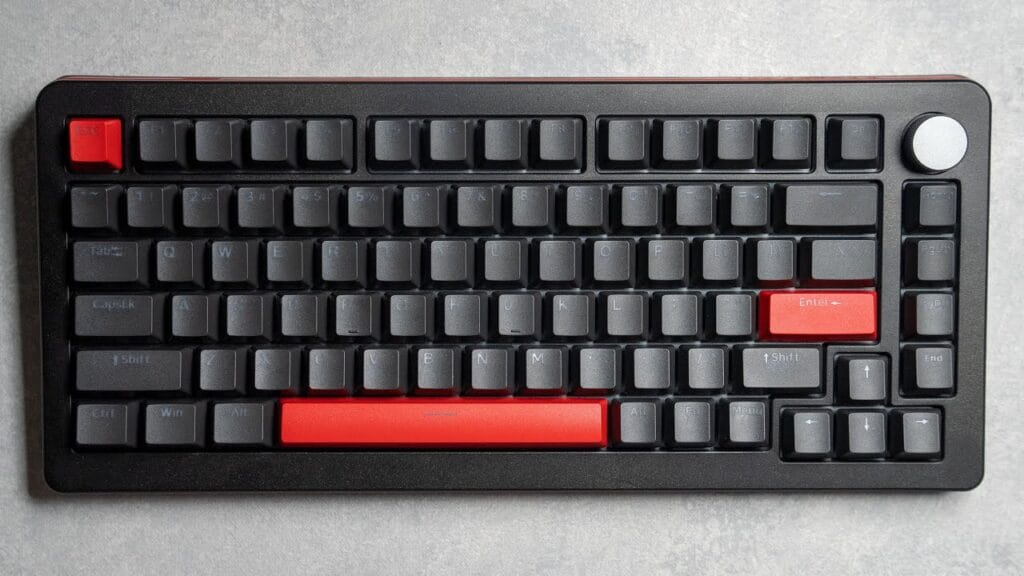
The DrunkDeer A75 Pro gives you the core feature set, Rapid Trigger and adjustable actuation, for nearly half the price of premium options. The plastic case feels budget-grade, and the keycaps are an afterthought, but the sensors work.
At around $100–$120, this is where Hall effect technology becomes accessible to everyone. You get 8,000 Hz polling, a 0.1 mm rapid trigger, and a solid actuation range.
The software is not as polished as Wootility, but it gets the job done. If you need the competitive advantage but genuinely can’t stretch the budget, this is where to start.
| PROS | CONS |
|---|---|
| Sub-$100 entry into hall effect gaming | Plastic build not premium |
| 8,000 Hz polling | Software lacks polish of Wooting or Keychron |
| Rapid trigger and adjustable actuation | No wireless option |
| Decent switch feel for the price | Keycaps feel cheap out of the box |
Best for: Budget-conscious gamers who want genuine Hall effect features without the flagship price.
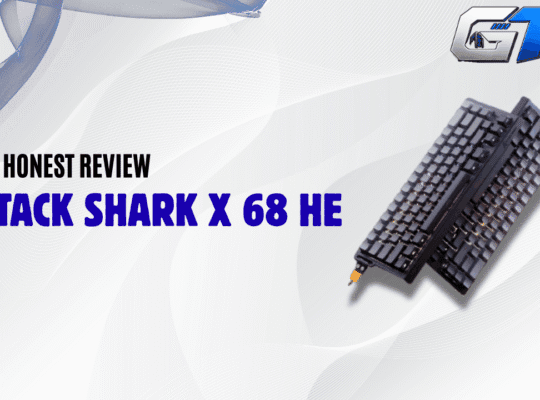
Attack Shark X68 HE—My Recommendation
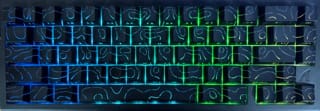
I spent around three months gaming on my brother’s Attack Shark X68 HE, and it quickly became one of the budget Hall Effect keyboards I recommend most. From competitive Valorant matches to long Red Dead Redemption 2 sessions, it consistently delivered fast, responsive input without feeling like a compromise.
Priced between $59.99 and $69.99, it offers features that are usually reserved for more expensive keyboards, including Rapid Trigger, adjustable actuation, and an 8000Hz polling rate. The aluminum top case adds a premium feel, while the smooth Hall Effect switches make it a great choice for competitive gaming.
The web-based software isn’t as refined as premium alternatives, and the 60% layout takes some getting used to. But if you’re looking for an affordable Hall Effect keyboard focused on gaming performance, the X68 HE delivers excellent value for the money.
Here is my detailed review of the Attack Shark X68 HE, including the price, release date, specifications and gaming performance.
| Pros | Cons |
|---|---|
| Excellent value for a Hall Effect keyboard | Wired only |
| Rapid Trigger and adjustable actuation | 60% layout isn’t for everyone |
| 8000Hz polling rate for competitive gaming | Advanced features require the web driver |
| Premium-feeling aluminum top case | No dedicated function or navigation keys |
| Smooth, responsive Hall Effect switches | – |
Best for: Budget-conscious gamers who want genuine Hall Effect performance in a compact 60% keyboard.
Hall Effect Gaming Keyboard Comparison Table
| Keyboard | Price | Polling Rate | Wireless | Rapid Trigger | Best For |
|---|---|---|---|---|---|
| Wooting 80HE | ~$175 | 8,000 Hz | No | Yes (0.1mm) | Best overall competitive |
| ASUS ROG Azoth 96 HE | ~$359.99 | 8,000 Hz | Yes | Yes (0.01mm) | Premium wireless |
| SteelSeries Apex Pro TKL Gen 3 | ~$200 | 1,000 Hz | Optional | Yes | Retail + brand trust |
| Keychron K3 HE | ~$130 | 8,000 Hz | Yes | Yes | Budget wireless |
| DrunkDeer A75 Pro | ~$100-$120 | 8,000 Hz | No | Yes | Best budget |
| Attack Shark X68 HE | ~$59.99-$69.99 | 8,000 Hz | Yes | Yes | Compact users |
Which Hall Effect Gaming Keyboard Should You Buy?
The best gaming Hall Effect keyboard in 2026 depends on your priorities, but the answer is never “stick with mechanical.”
- For pure competitive performance: The Wooting 80HE and X68 HE is still the benchmark. Best software, best community support, and reliable rapid trigger at 8,000Hz.
- For the premium wireless experience: The ASUS ROG Azoth 96 HE broke new ground by delivering 8,000Hz wireless polling. It’s expensive, but it genuinely earns its price.
- For easy retail access and brand trust: The SteelSeries Apex Pro TKL Gen 3 is what you grab when you want a proven hall effect board from a store shelf today.
- For wireless on a budget: The Keychron K3 HE is the smart pick, with triple-mode connectivity, QMK support, and legitimate hall effect features for under ~$150.
- For tight budgets: The DrunkDeer A75 Pro gets you into the hall effect ecosystem for under ~$120. Build quality reflects the price, but the switches don’t.
The technology has matured. Prices have dropped. If you’ve been on the fence, 2026 is the year to make the switch. Pick your board, configure your rapid trigger, and see the difference for yourself. Ready to upgrade your setup? Explore our Best Gaming Keyboards for Every Budget guide to find the perfect keyboard without overspending
Based on current market availability and expert reviews from PC Gamer, GamesRadar, and hands-on community testing.
Questions That People Ask
A Hall effect keyboard uses magnetic sensors instead of physical contacts, eliminating debounce delay. It allows adjustable actuation (0.1 mm–4.0 mm) and a rapid trigger, resulting in faster reactions and more precise inputs in competitive gaming.
Yes, for wired competitive gaming. The Wooting 80HE leads with its Wootility software, 8,000Hz polling, and frequent firmware updates. However, for wireless, the ASUS ROG Azoth 96 HE is now a strong alternative.
Yes. They function as standard keyboards, so all games support them. Advanced features like SOCD are optimized to follow competitive rules, but you should still check game-specific restrictions.
Yes. Prices have dropped significantly, making them more accessible. Even casual users benefit from smoother keypresses, a longer lifespan, and adjustable actuation for comfort.
Rapid trigger resets a key instantly as you release it, without waiting for a fixed reset point. This allows faster movement, cleaner direction changes, and quicker reactions—especially in FPS games.