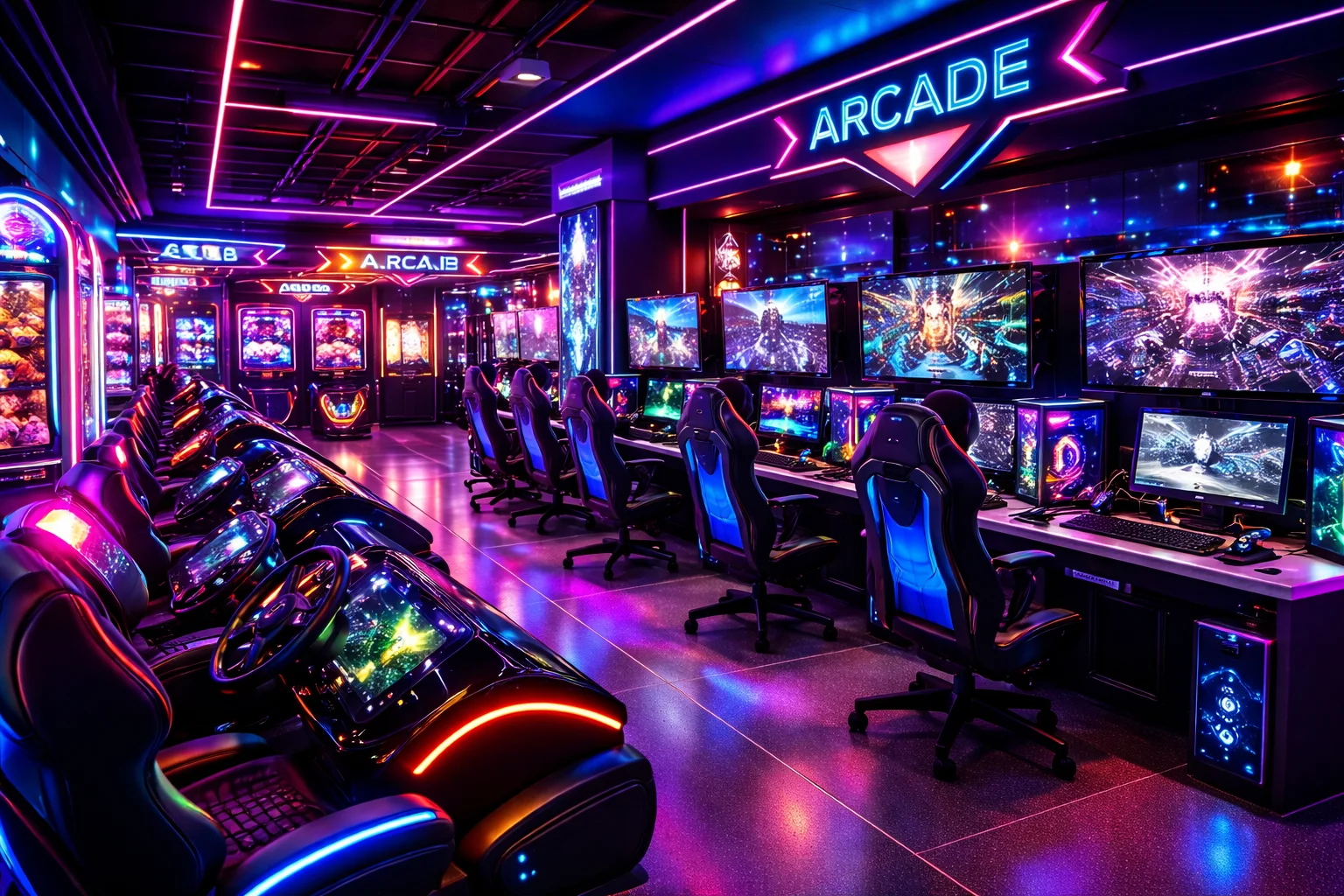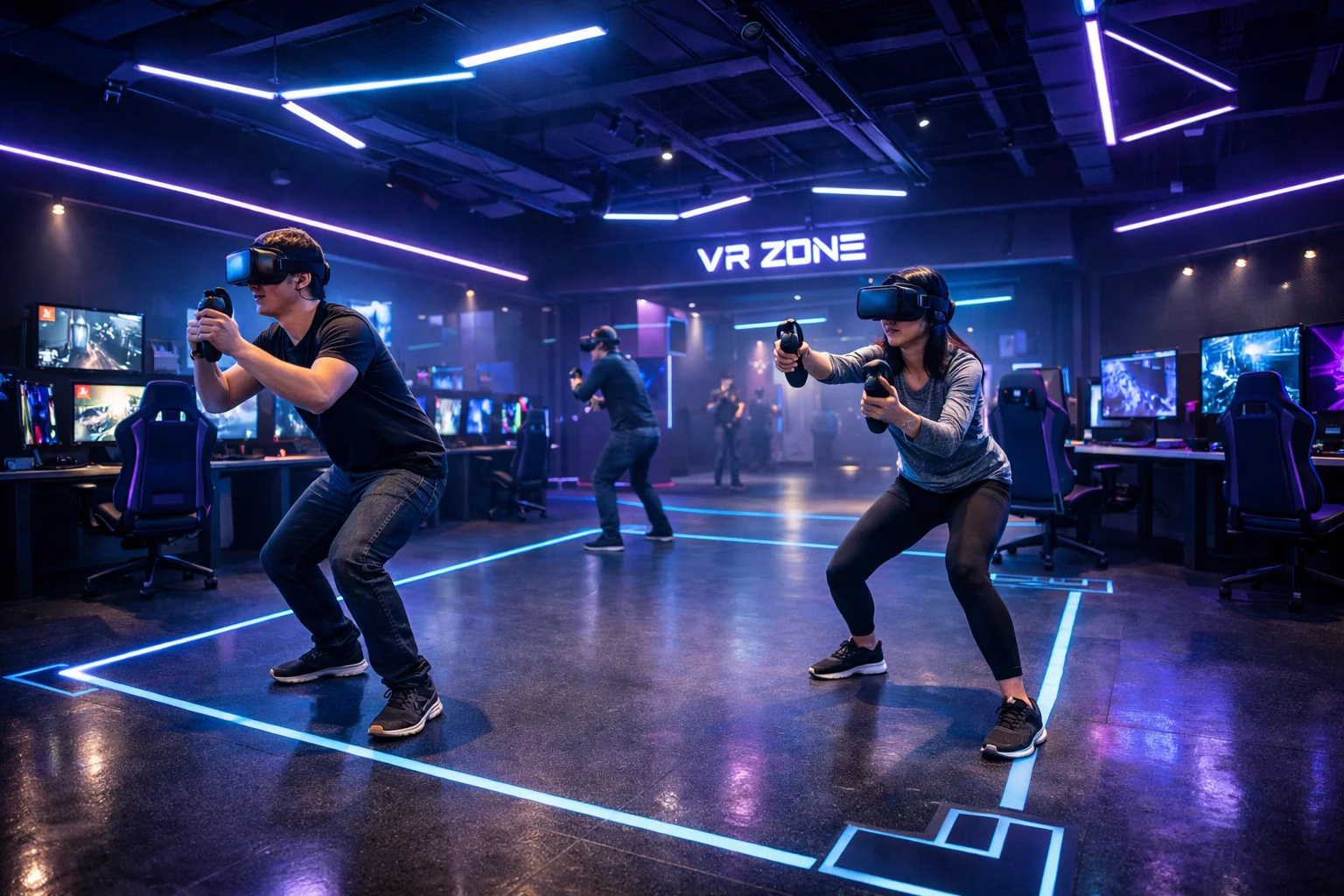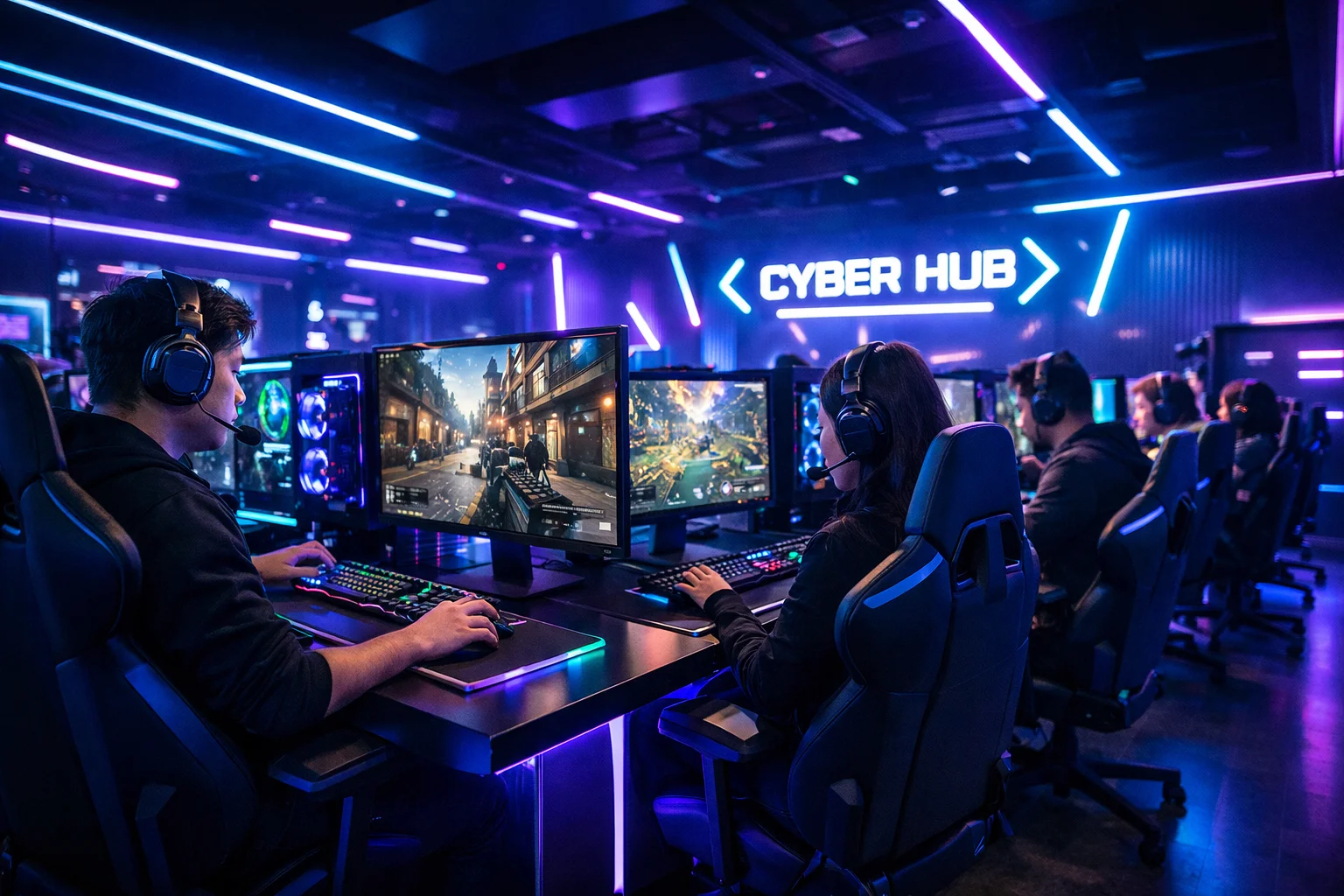
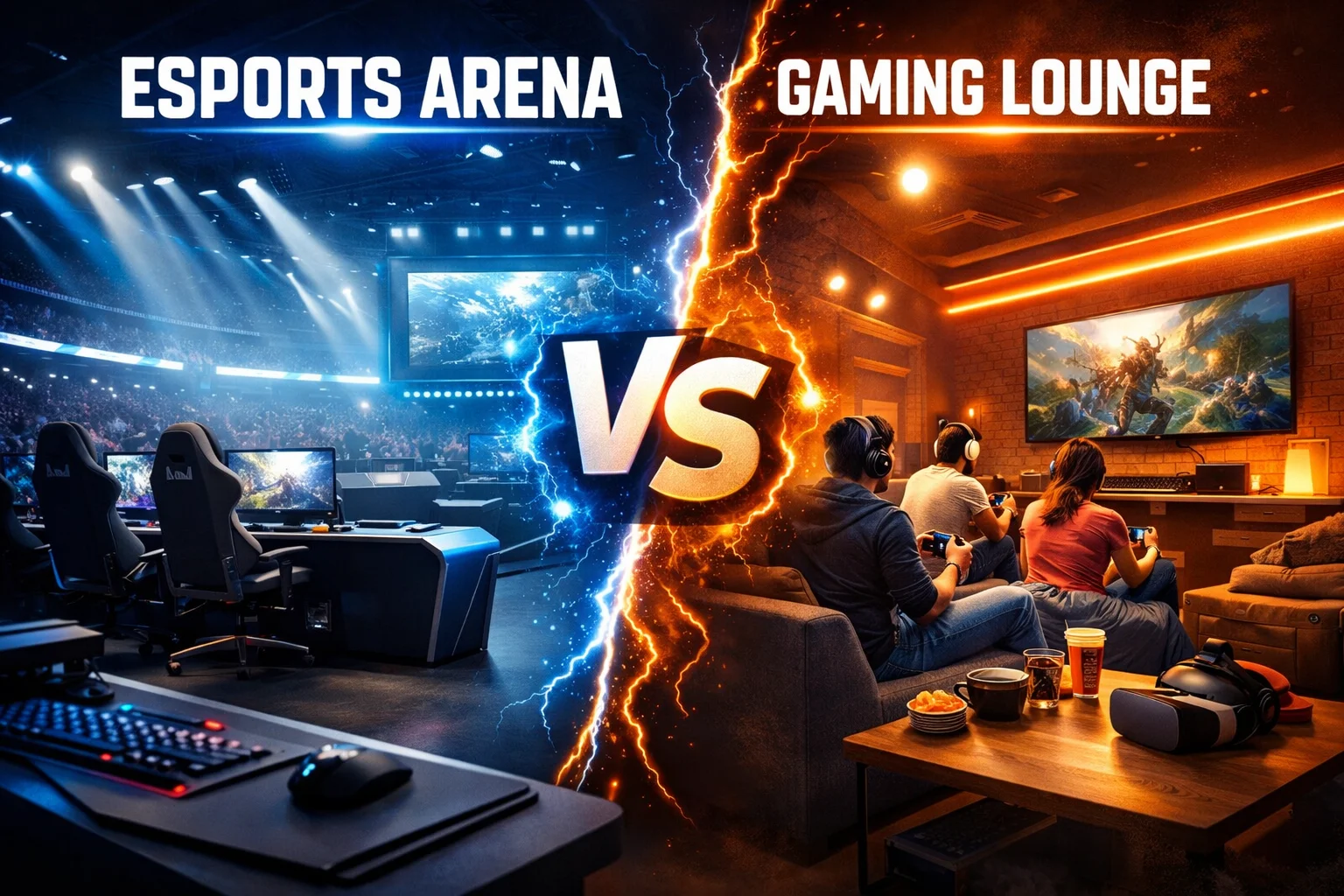
The esports gaming arena vs. gaming lounge. The industry has evolved far beyond traditional play spaces. Today, businesses and gaming enthusiasts often choose between building an esports gaming arena or a gaming center.
While both offer immersive gaming experiences, their purpose, setup, audience, and profitability models are very different.
Understanding the difference between an esports arena vs gaming lounge helps investors, gamers, and entrepreneurs decide which model fits their goals best.
What Is an Esports Gaming Arena?
An esports gaming arena is a professional competitive gaming facility designed specifically for tournaments, team practice, and organized esports events. These arenas focus on performance, competition, and large-scale multiplayer gaming.
Professional esports arenas often feature tournament stages, spectator seating, broadcasting systems, and identical gaming setups to maintain fairness during competitions.
ℹ️ Info Box: An esports gaming arena operates similarly to a sports stadium but for video games—hosting competitions, leagues, live audiences, and professional-level gameplay.
Key Characteristics of an Esports Gaming Arena
- Tournament-ready gaming PCs
- High-refresh competitive monitors
- Dedicated team stations
- Live streaming and broadcasting setup
- Spectator viewing areas
- Low-latency professional networking
These venues are commonly used for esports training camps and regional gaming tournaments.
What Is a Gaming Lounge?
A gaming lounge is a casual, entertainment-focused gaming space where players come to relax, socialize, and enjoy games with friends. Unlike competitive arenas, gaming lounges prioritize comfort and accessibility.
Gaming lounges are commonly located in malls, cyber hubs, or entertainment districts and may include console gaming zones, PC stations, and VR gaming areas.
⚠️ Note: A gaming lounge focuses on experience and social interaction rather than professional competition. It attracts casual gamers more than esports athletes.
Typical gaming lounge features include comfortable seating, ambient lighting, and flexible gaming sessions.
| Feature | Esports Gaming Arena | Gaming Lounge |
|---|---|---|
| Primary Goal | Competitive gaming & tournaments | Casual gaming & entertainment |
| Target Audience | Professional & competitive players | Casual gamers & friends |
| Equipment Standard | Professional esports-grade | Consumer-level high-end setups |
| Environment | Competitive & structured | Relaxed & social |
| Revenue Model | Events, sponsorships, tournaments | Hourly play & memberships |
| Space Requirement | Large venue | Small to medium space |
| Streaming Setup | Essential | Optional |
| Spectator Area | Yes | Rare |
| Investment Cost | High | Moderate |
Audience Difference: Competitive vs Casual Gaming
An esports arena attracts teams preparing for tournaments and serious players seeking consistent performance environments. These gamers value identical hardware setups, stable internet routing, and competitive fairness.
Gaming lounges, on the other hand, attract:
- Friend groups
- Students
- Weekend gamers
- Families
- Social communities
The lounge environment encourages relaxation rather than competition.
Equipment Requirements Comparison
Both the esports arena and the gaming lounge have different equipment requirements.
Esports Gaming Arena
Requires standardized hardware such as identical PCs, tournament keyboards, esports mice, and professional audio systems. Performance consistency is critical.
Gaming Lounge
Offers flexibility. A lounge may include consoles, racing simulators, VR stations, or mixed gaming systems to appeal to broader audiences.
Many lounges combine entertainment with café-style seating to increase customer retention.
✅ Success Insight: Some of the most profitable gaming businesses combine esports arena sections with gaming lounge areas, balancing competitive events with casual daily revenue.
Investment and Setup Cost Differences
Esports arenas and gaming lounges have different setup costs. Below we differentiate the costs between them.
Esports Gaming Arena Cost
Higher investment due to:
- Tournament infrastructure
- Streaming equipment
- Stage lighting and displays
- Networking systems
- Event management setup
Large arenas may require sponsorship partnerships to remain profitable.
Gaming Lounge Cost
Lower startup cost because:
- Smaller space requirement
- Flexible equipment choices
- No mandatory broadcasting setup
Gaming lounges generate steady daily income through hourly sessions.
Revenue Models Explained
Both have different revenue sources.
Esports Arena Revenue Sources
- Tournament hosting
- Sponsorship deals
- Brand partnerships
- Ticket sales
- Streaming rights
- Team bootcamps
Gaming Lounge Revenue Sources
- Hourly gaming sessions
- Membership packages
- Food & beverage sales
- Birthday parties
- Community events
Which One Is Better for Business?
The answer depends on your goals.
If your aim is professional recognition and large esports events, an esports gaming arena is ideal. However, it requires significant investment and operational planning.
If you want consistent daily customers and lower financial risk, a gaming lounge is often the smarter starting point.
Hybrid models combining both concepts are becoming increasingly popular worldwide.
Future Trend: Hybrid Gaming Spaces
Modern gaming centers increasingly merge esports arenas with social lounges. These hybrid spaces allow casual players during normal hours while hosting tournaments on weekends.
This approach maximizes space utilization and revenue potential while building a strong gaming community.
Final Thoughts
Choosing between an esports gaming arena vs gaming lounge depends on audience demand, budget, and long-term business vision. Esports arenas deliver competitive prestige and event-driven income, while gaming lounges provide social engagement and steady revenue.
As gaming continues to grow globally, successful gaming businesses are those that balance competition with community—creating spaces where both professional players and casual gamers feel welcome.
🎮 Level Up Your Gaming Knowledge with Gaming Tech Zone
Discover expert guides on gaming zones, esports setups, cloud gaming, gaming hardware reviews, and business insights.
Visit GamingTechZone.com →FAQs
Yes, but profitability often depends on sponsorships, tournaments, and event management.
Yes, gaming lounges require lower investment and attract daily customers.
Yes, many lounges organize small tournaments and community competitions.
A gaming lounge is generally better for beginners due to lower risk and operational complexity.
Yes, standardized professional gaming hardware is essential for fairness and performance.
Yes, hybrid gaming centers combining lounges and esports arenas are becoming the most successful model.